High-Protein Alkaline Diet: More Protein, Less Acid Load
Basentracker Team
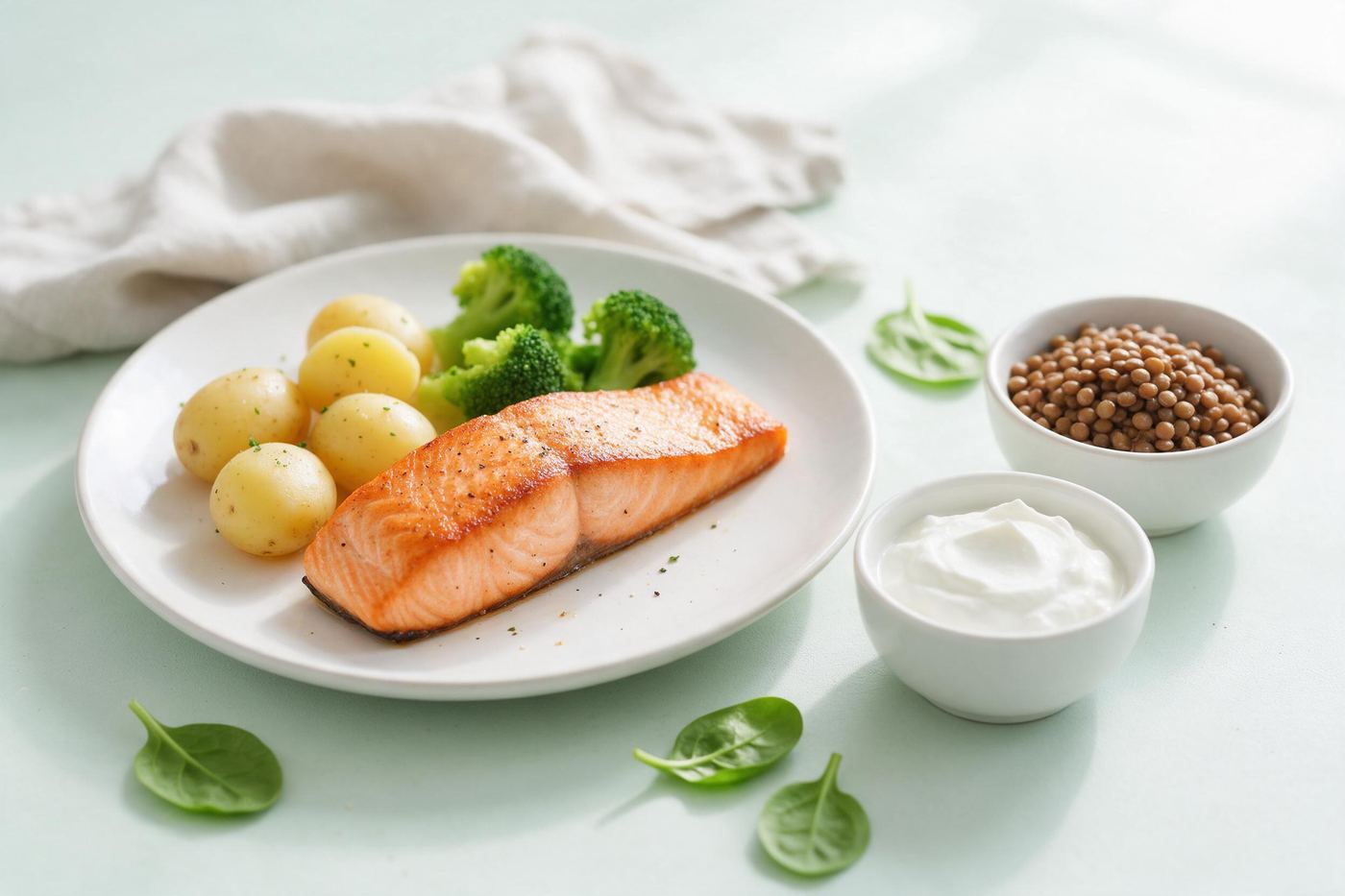
Protein is the strongest acid former in your diet: in the PRAL formula, every gram counts as +0.49. Per 20 g of protein, meat and fish add about +8 to +9 to your daily balance. Egg, quark (a fresh, high-protein dairy product similar to strained yogurt) and hard cheese add about +15 to +16, lentils and chickpeas only +4 to +7, and kidney beans almost nothing (+1.5). A high-protein diet stays balanced if you add about 200 g of vegetables or potatoes to every serving of animal protein and get part of your protein from legumes.
Why protein is everywhere right now
Protein yogurt, protein bars, protein bread: according to the YouGov study “Nutrition 2026”, high protein is one of the three best-known diet trends in Germany. Add to that people who are losing weight or using a weight-loss injection. They are rightly advised to eat more protein so they don’t lose too much muscle as they lose weight.
The German Nutrition Society (DGE) recommends 0.8 g of protein per kilogram of body weight for adults, and 1.0 g from age 65. For weight loss and strength training, 1.2 to 1.6 g is often cited. For a person weighing 75 kg, that is 60 g normally and up to 120 g on the trend. Depending on the source, these extra 60 g of protein mean +25 to more than +50 on your daily acid-base balance.
Protein in the PRAL
Protein contains the sulfur-containing amino acids methionine and cysteine. Breaking them down produces sulfuric acid, which your kidneys have to excrete. Animal protein also brings a lot of phosphorus, which is acid-forming as well. Plant protein, on the other hand, usually comes with potassium and magnesium, which offset part of the acid right away. You can read more about the formula in the article PRAL explained.
So for a fair comparison, what matters is not the PRAL per 100 g but the acid load per gram of protein. The table converts both to a serving of 20 g of protein:
| Protein source | Protein per 100 g | PRAL per 100 g | PRAL per 20 g protein |
|---|---|---|---|
| Soy protein powder | 55.6 g | +50.7 | +18.3 |
| Low-fat quark (curd cheese) | 11.8 g | +9.4 | +15.8 |
| Gouda | 22.5 g | +17.5 | +15.6 |
| Egg | 14.1 g | +10.6 | +15.1 |
| Cottage cheese, low-fat | 11.8 g | +8.0 | +13.5 |
| Tofu, plain | 15.5 g | +8.3 | +10.7 |
| Salmon, raw | 19.9 g | +9.3 | +9.3 |
| Chicken breast, raw | 23.3 g | +10.2 | +8.8 |
| Beef mince, raw | 19.1 g | +7.9 | +8.3 |
| Lentils, boiled | 9.1 g | +3.1 | +6.8 |
| Chickpeas, boiled | 8.4 g | +1.7 | +4.0 |
| Kidney beans, boiled | 8.6 g | +0.7 | +1.5 |
Nutrition values and PRAL: Basentracker food database (German Nutrient Database, Bundeslebensmittelschlüssel 4.0, and other sources; see Sources). The last column is calculated from these values and is an estimate.
Three things stand out. Meat, fish and tofu are surprisingly close together at about +8 to +11 per 20 g of protein; the label “plant-based” alone doesn’t make a protein more alkaline. Dairy and eggs carry more acid: low-fat quark, Gouda and egg reach +15 to +16 because they bring a lot of phosphorus and little potassium per gram of protein, and soy protein powder tops the list at +18.3. And legumes have a clear advantage: lentils and chickpeas have a much lower acid load per gram of protein, and kidney beans are close to zero.
How many vegetables offset 20 g of protein
A serving of 20 g of protein from meat or fish adds about +9; from quark, egg or cheese, about +15. This is how much it takes to offset +10:
- 80 g spinach (−12.2 per 100 g), about a large handful, fresh or as a side
- 150 g potatoes (−6.5 per 100 g), a small side
- 160 g banana (−6.4 per 100 g), one large banana
- 160 g broccoli (−6.1 per 100 g raw); boiled (−1.3), it would take 800 g
- 520 g apple (−1.9 per 100 g); fruit alone is rarely enough
In practice, this means a plate of chicken, potatoes and vegetables is balanced. A protein shake with soy powder and milk as a snack is not. It needs a banana or berries on the side.
ℹ️ With a weight-loss injection
If you are losing weight with a GLP-1 medication, you eat smaller portions overall. Protein then rightly gets priority, and vegetables easily fall by the wayside. One serving of legumes a day covers both: protein, fiber against the typical constipation, and a low acid load. Talk to your doctor about how much protein is right for you.
High-protein and balanced: a sample day with about 120 g of protein
- Breakfast: 250 g low-fat quark with 150 g berries and a banana
- Lunch: lentil and vegetable curry (250 g cooked lentils, 200 g spinach, 150 g tomatoes), 150 g rice
- Afternoon: two eggs, half a cucumber, one bell pepper
- Dinner: 150 g salmon with 250 g potatoes and 200 g broccoli
- Drinks: water, coffee, herbal tea
The day provides about 120 g of protein, and the balance is still around −12, because every protein serving comes with an alkaline side. Without the fruit, spinach, tomatoes, potatoes and broccoli, the same day would be around +49. You can work through your own meals the same way in the PRAL calculator.
⚠️ If you have kidney disease
If your kidney function is reduced, different rules apply: protein is usually limited, not increased. Read more in the article Diet for chronic kidney disease.
Read more: PRAL explained, Meat and sausage in the alkaline food list, Legumes in the alkaline food list, Alkaline dinner, Fibermaxxing and PRAL.
Conclusion
More protein makes sense for many people: when losing weight, as you get older and in sports. But protein is the strongest acid former in your diet. If you eat an alkaline side with every protein serving and get part of your protein from beans, lentils and chickpeas, you can eat much more protein without tipping your acid-base balance.
Track protein and your balance at the same time.
The Basentracker app shows the PRAL for every meal. That way you can see whether your high-protein day stays balanced.
Free for Android · iPhone coming soon