Fibermaxxing: Which High-Fiber Foods Are Alkaline?
Basentracker Team
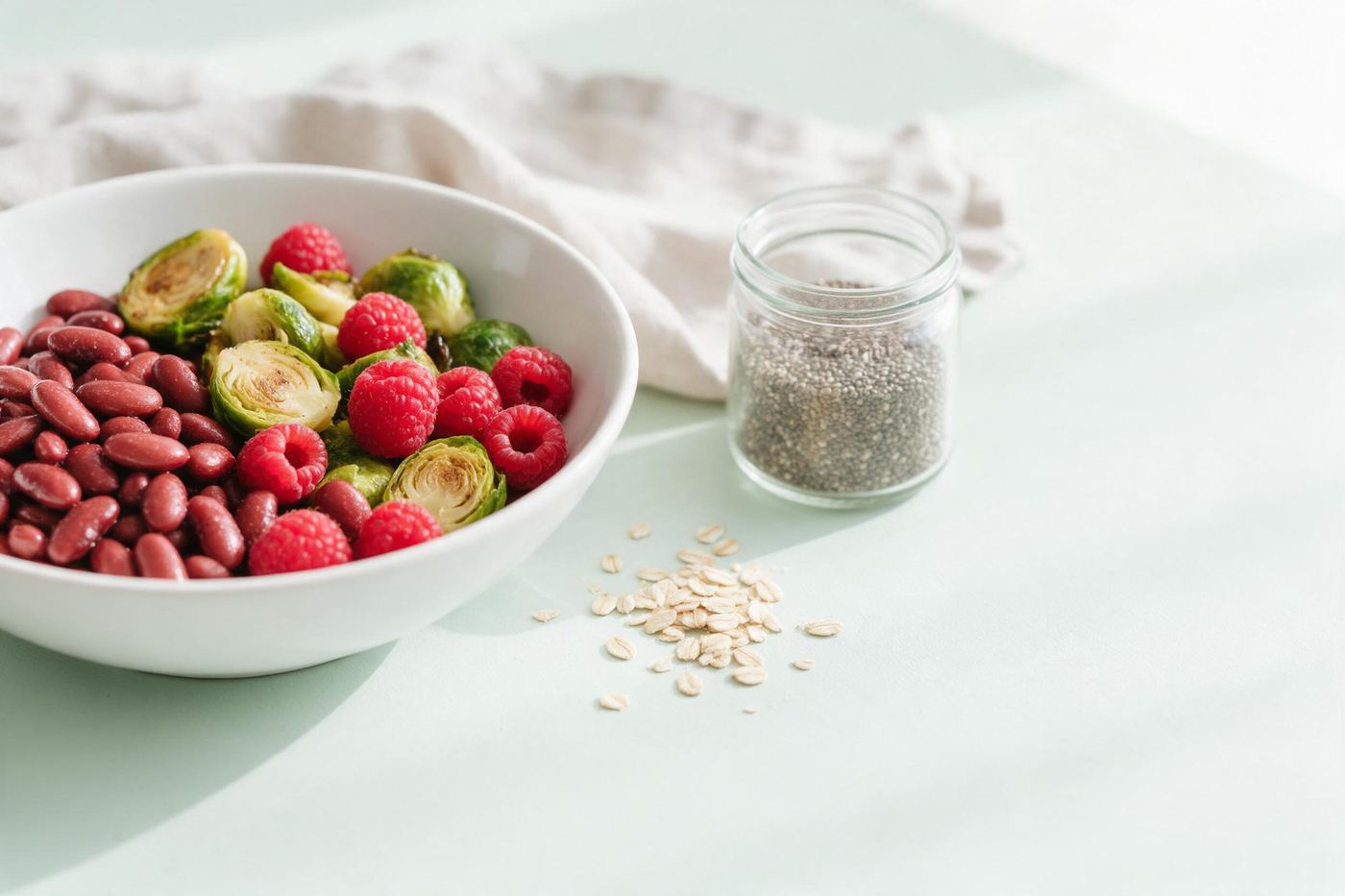
Fibermaxxing means deliberately eating more fiber, at least the 30 g a day recommended by the German Nutrition Society (DGE). For your acid-base balance, what matters is where the fiber comes from. Vegetables, fruit and potatoes provide fiber and are alkaline. Beans are close to zero. Bran, rolled oats, wholemeal bread and chia seeds are acid-forming. If you reach 30 g through grains and seeds, you can quickly end up at a PRAL of +9 for the day. If you put vegetables and legumes at the center, you get more fiber with a balance of about −25.
What’s behind the trend
The term comes from social media and became the most talked-about diet trend of 2026. Unlike many trends, it has the support of experts. Fiber keeps you full, smooths out blood sugar spikes, lowers cholesterol and feeds your gut bacteria. The DGE recommends at least 30 g a day for adults, but most people only get 20 to 25 g.
Critics point to two issues: extreme amounts all at once that overwhelm your gut, and powders and bars with isolated fibers that can’t replace the variety of whole foods. A third point is missing from almost every discussion, and that’s what this article is about: the acid-base balance.
Fiber is not automatically alkaline
Fiber itself does not factor into the PRAL value. Whether a high-fiber food is alkaline or acid-forming depends on its other nutrients. Potassium and magnesium pull the value into the negative, while protein and phosphorus push it into the positive. Vegetables and fruit are rich in potassium. Grains, bran and seeds are rich in phosphorus.
| Food | Fiber per 100 g | PRAL per 100 g | Balance |
|---|---|---|---|
| Wheat bran | 43.2 g | +9.2 | acid-forming |
| Chia seeds | 40.2 g | +6.3 | acid-forming |
| Flaxseeds | 22.7 g | +4.2 | slightly acid-forming |
| Wholemeal crispbread | 19.9 g | +1.6 | slightly acid-forming |
| Oat bran | 15.4 g | +17.1 | strongly acid-forming |
| Rolled oats | 11.0 g | +6.8 | acid-forming |
| Wholemeal bread | 10.0 g | +2.6 | slightly acid-forming |
| Kidney beans, boiled | 11.1 g | +0.7 | slightly acid-forming |
| Chickpeas, boiled | 10.6 g | +1.7 | slightly acid-forming |
| Lentils, boiled | 7.2 g | +3.1 | slightly acid-forming |
| Green peas, boiled | 5.9 g | +0.7 | slightly acid-forming |
| Artichoke, boiled | 13.6 g | +0.8 | slightly acid-forming |
| Kale | 8.4 g | −11.7 | strongly alkaline |
| Raspberries | 4.7 g | −2.7 | alkaline |
| Brussels sprouts, cooked | 4.0 g | −4.8 | alkaline |
| Carrot | 2.9 g | −6.3 | strongly alkaline |
| Pear | 2.8 g | −2.3 | alkaline |
| Potato, boiled | 2.0 g | −6.5 | strongly alkaline |
| Banana | 2.0 g | −6.4 | strongly alkaline |
Nutrition data and PRAL: Basentracker food database (German Nutrient Database (Bundeslebensmittelschlüssel, BLS) 4.0 and other sources, see Sources), PRAL calculated according to Remer and Manz.
The table shows the pattern. Per 100 g, bran and seeds provide the most fiber, but also the highest acid load. Vegetables and fruit have less fiber per 100 g, but you eat larger amounts of them, and every serving shifts your balance toward alkaline. Legumes sit in between: lots of fiber, little acid load.
Two ways to get 30 g of fiber
Both days reach the DGE target. The difference is in the balance.
Way 1: Bran, seeds and whole grains
| Food | Amount | Fiber | PRAL |
|---|---|---|---|
| Oat bran in muesli | 40 g | 6.2 g | +6.8 |
| Chia seeds | 20 g | 8.0 g | +1.3 |
| Wholemeal bread | 150 g | 15.1 g | +3.8 |
| Apple | 150 g | 3.4 g | −2.9 |
| Total | 32.7 g | +9.1 |
Way 2: Vegetables, legumes and fruit
| Food | Amount | Fiber | PRAL |
|---|---|---|---|
| Rolled oats | 50 g | 5.5 g | +3.4 |
| Kidney beans, boiled | 150 g | 16.6 g | +1.0 |
| Brussels sprouts, cooked | 200 g | 8.0 g | −9.6 |
| Potatoes, boiled | 250 g | 5.1 g | −16.3 |
| Raspberries | 150 g | 7.0 g | −4.1 |
| Total | 42.3 g | −25.6 |
Way 1 covers only the fiber from these four foods and already adds an acid load of +9, before any meat, cheese or eggs. Way 2 provides more fiber, even includes rolled oats, and still comes in at −26. The difference of 35 PRAL points equals a bit more than two 150 g servings of chicken breast.
ℹ️ Oats and whole grains are still good
This is not an argument against whole grains. Rolled oats provide soluble beta-glucan, which lowers cholesterol levels, and wholemeal bread keeps you fuller than white bread. It’s about the combination: pair wholemeal bread with tomatoes, cucumber or radishes, and muesli with banana or berries. Then the balance evens out on its own.
Alkaline-focused fibermaxxing: five rules
- Vegetables first. Two large servings a day, one of them cabbage, leafy greens or pod vegetables. That gives you 10 to 15 g of fiber and most of your alkaline load.
- Legumes every day. Beans, peas, lentils or chickpeas: lots of fiber, lots of protein, hardly any acid load. Beans and peas are almost at zero.
- Potatoes alongside bran. Per 100 g, potatoes have only one twentieth of the fiber of wheat bran, but 250 g of them add just over −16 to your balance and offset a spoonful of bran several times over.
- Fruit as a supplement. Berries, pears and apples provide soluble fiber and are alkaline across the board.
- Increase slowly and drink enough. Add 3 to 5 g per week, along with 1.5 to 2 liters of water. If you jump from 15 to 40 g, you’ll get bloating.
Read more: High-fiber foods: table with PRAL, Alkaline vegetables ranked by PRAL, What is the PRAL value?, Alkaline food list, Alkaline breakfast.
Conclusion
Fibermaxxing is one of the few trends that experts support. But fiber is not automatically alkaline. Bran, seeds and whole grains bring lots of fiber along with an acid load. Vegetables, potatoes, fruit and beans bring fiber along with bases. If you reach 30 g mainly through vegetables and legumes and combine whole grains with them, you get both.
Fiber up, balance in check.
The Basentracker app shows you the PRAL of every meal. That way you can see right away whether your high-fiber day stays alkaline.
Free for Android · iPhone coming soon