Kidney Disease Diet: Lower Acid Load, Watch Potassium
Basentracker Team
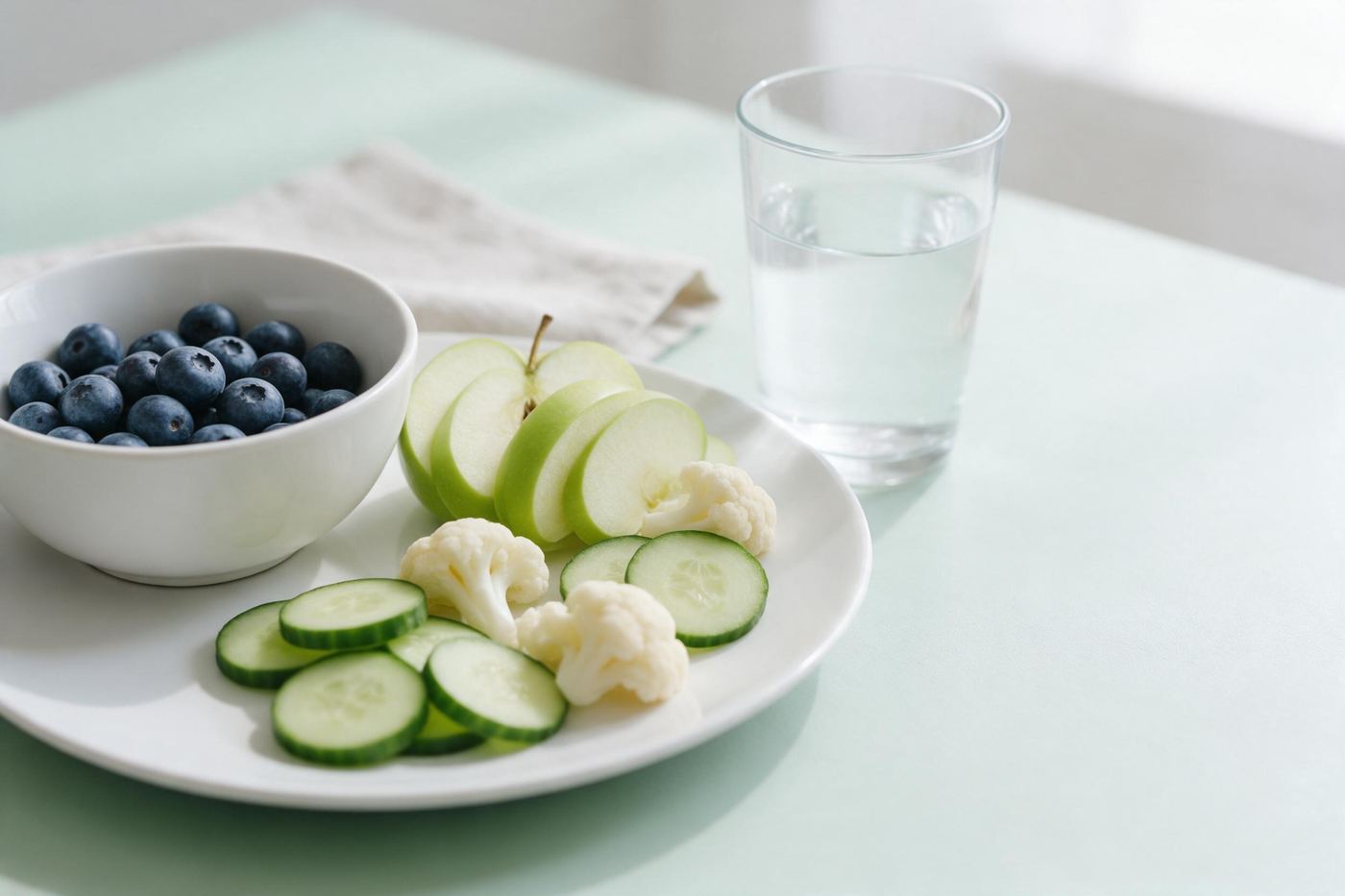
With chronic kidney disease, your kidneys can excrete less acid. In studies, a high dietary acid load is linked to faster disease progression, and in patients with early metabolic acidosis, eating more fruit and vegetables improved blood values about as well as baking soda (sodium bicarbonate) tablets. At the same time, many alkaline foods are high in potassium, and potassium often has to be limited in advanced disease. The solution: alkaline foods that are low in potassium, fewer phosphate additives, moderate protein, and regular lab checks, coordinated with your nephrology team.
⚠️ Important first
This article does not replace advice from your doctor or a dietitian. With kidney disease, the right diet depends on your stage, your lab values and your medications. Only change your potassium, phosphate and protein intake after talking with your nephrologist or a registered dietitian.
Why acid load matters in kidney disease
Healthy kidneys easily excrete the acid from your diet. As kidney function declines, this gets harder. From about stage 3 to 4, many patients see their blood bicarbonate drop, and metabolic acidosis develops. It is more than a lab value: it promotes muscle loss, strains the bones and is linked to a faster loss of kidney function.
In observational studies, people with a high dietary acid load, measured as PRAL or as estimated net acid load, had a higher risk that their kidney disease would progress. In intervention studies by the research group of Nimrit Goraya and Donald Wesson, alkalizing fruit and vegetables improved blood values in patients with stage 3 and 4 disease and early acidosis about as well as sodium bicarbonate tablets. Patients with high potassium were excluded, and potassium was monitored closely. This limitation is the heart of the topic.
To learn how to estimate the acid load of individual foods, read the article PRAL value.
The conflict: alkaline often means high in potassium
Potassium is the most important alkaline nutrient in the PRAL. That is why spinach, bananas, potatoes, avocado and dried fruit are so alkaline, and these are exactly the foods on the lists to avoid when potassium is high. High potassium in the blood (hyperkalemia) can trigger heart rhythm problems. The risk rises in advanced stages and with medications such as ACE inhibitors, ARBs (angiotensin receptor blockers) or potassium-sparing diuretics.
But there are alkaline foods that are low in potassium:
| Food | Potassium per 100 g | PRAL per 100 g | Rating |
|---|---|---|---|
| Blueberries | 84 mg | −1.3 | alkaline, low potassium |
| Apple | 111 mg | −1.9 | alkaline, low potassium |
| Cucumber | 181 mg | −3.3 | alkaline, low potassium |
| Strawberries | 183 mg | −3.0 | alkaline, low potassium |
| Grapes | 198 mg | −3.5 | alkaline, low potassium |
| Cauliflower, boiled | 215 mg | −2.6 | alkaline, low potassium |
| Tomato | 239 mg | −4.2 | alkaline, medium potassium |
| Zucchini | 258 mg | −4.1 | alkaline, medium potassium |
| Lettuce | 306 mg | −6.2 | alkaline, medium potassium |
| Banana | 334 mg | −6.4 | alkaline, high potassium |
| Potato, boiled | 384 mg | −6.5 | alkaline, high potassium |
| Avocado | 550 mg | −9.9 | alkaline, very high potassium |
| Spinach | 573 mg | −12.2 | alkaline, very high potassium |
| Dried apricots | 1,136 mg | −21.8 | alkaline, very high potassium |
Nutrient values and PRAL: Basentracker food database (German Nutrient Database, Bundeslebensmittelschlüssel 4.0, and other sources, see Sources).
You can also reduce potassium: cut potatoes and vegetables into small pieces, soak them for a few hours, boil them in plenty of water and pour off the cooking water. This lowers the potassium content by one third to one half. The PRAL drops along with it, so the food becomes less alkaline, but it usually stays in the negative range.
Protein: less, not more
Protein is the strongest acid former in your diet, and it puts extra strain on the kidneys through the filtration load. The international KDIGO guideline recommends that adults with chronic kidney disease from stage 3 who are not on dialysis eat about 0.8 g of protein per kilogram of body weight per day, and it advises against a very high-protein diet. For 70 kg, that is about 56 g.
Plant protein sources have two advantages here: less acid load per gram of protein, and phosphorus that is absorbed less well than from animal sources. Legumes, however, are high in potassium, so here too your lab values decide. Different rules apply on dialysis, where more protein is usually recommended.
Phosphate: a double win
Phosphorus raises the PRAL, and in kidney disease it also strains the blood vessels and bones. Phosphate additives have the strongest effect because they are absorbed almost completely: processed cheese, cooked sausages, cooked ham, cola, baking mixes and ready meals. On the ingredient list they appear as phosphate, diphosphate, polyphosphate or E 338 to E 341 and E 450 to E 452. If you avoid these products, you lower phosphate and acid load at the same time.
For an overview, see the table low-phosphorus foods with a potassium column.
What this means for everyday life
- Know your lab values. Potassium, phosphate and bicarbonate in your blood determine how much leeway you have.
- Alkaline and low in potassium. Make apples, berries, grapes, cucumber, cauliflower, bell peppers, zucchini and lettuce your foundation.
- Moderate protein. Smaller portions of meat, fish and cheese, with part of your protein from plant sources if your potassium allows it.
- Avoid phosphate additives. Cook fresh instead of buying ready-made products, and cut out processed cheese and cooked sausages.
- Go easy on salt. Less salt protects your blood pressure and your kidneys.
Read more: PRAL value explained, Acid-base balance made simple, Diet for kidney stones, High-potassium foods, Low-phosphorus foods.
Conclusion
With chronic kidney disease, a low acid load is a sensible goal: it can improve the bicarbonate level in your blood and slow progression. But the way to get there is not the same as for healthy people. Alkaline foods that are low in potassium, fewer phosphate additives and moderate protein bring these goals together, always matched to your own lab values and your treatment.
Track your acid load. Leave the lab values to your doctor.
The Basentracker app shows the PRAL of your meals. For potassium and phosphate, follow the plan from your nephrology team.
Free for Android · iPhone coming soon