What Is PRAL? Meaning, Formula and How to Calculate It
Basentracker Team
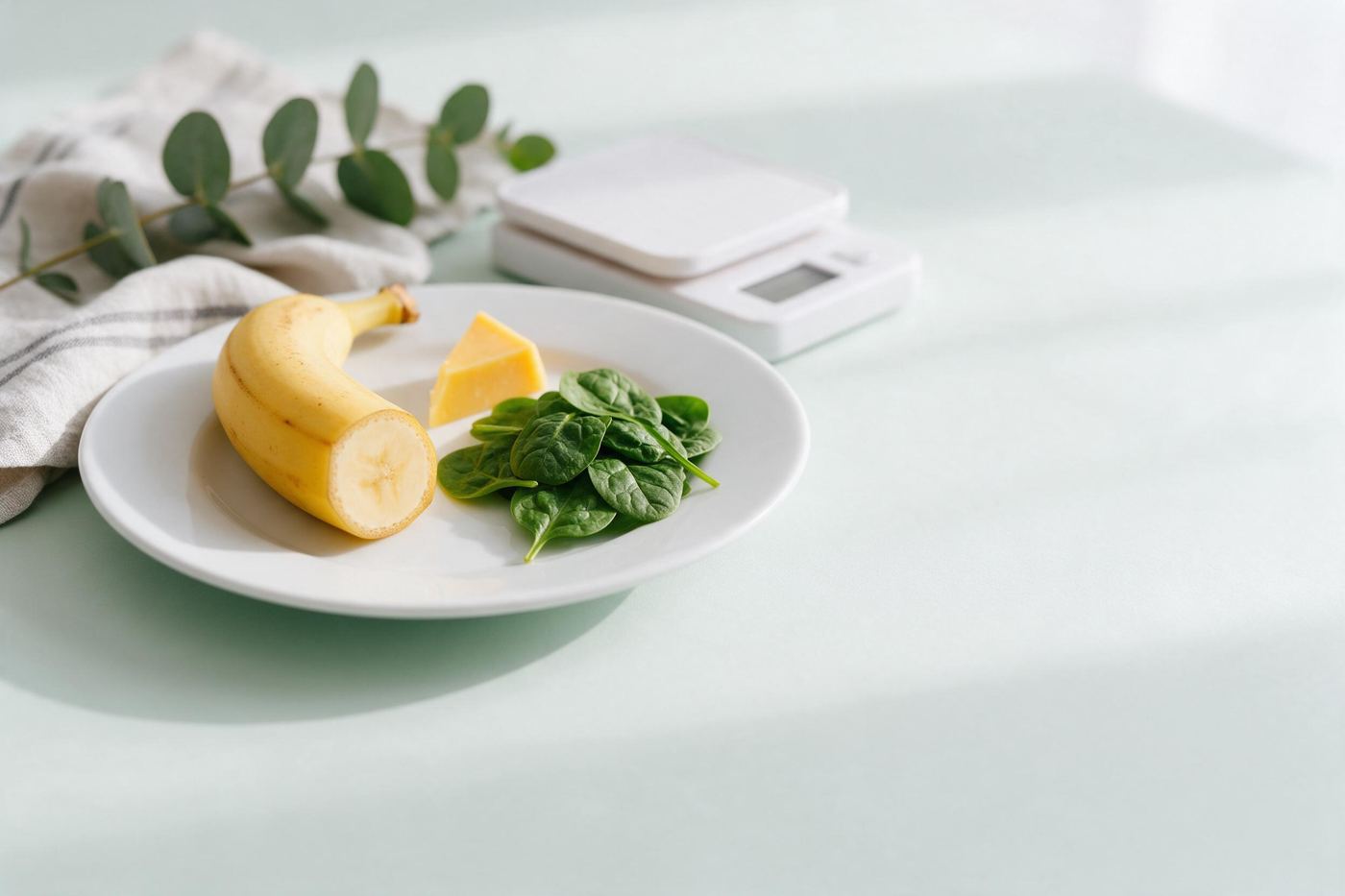
PRAL (potential renal acid load) tells you how much acid or base 100 g of a food leaves behind in your body after digestion. It is calculated from five nutrients: protein and phosphorus raise it, while potassium, magnesium and calcium lower it. Negative values mean alkaline, positive values mean acid-forming. For your diet, what counts is not the single value but the total for the day: amount times PRAL divided by 100, added up over all servings.
Where PRAL comes from
The formula was developed by the nutrition researchers Thomas Remer and Friedrich Manz at the Research Institute of Child Nutrition in Dortmund, Germany. They published it in 1995 and tested it on study participants: the acid load calculated from the diet matched the acid the kidneys actually excreted closely. That is still the reason PRAL is used in research today, for example in studies on bones, kidney stones and kidney function.
“Potential renal acid load” describes exactly what is measured: not the acidity of the food itself, but the load that reaches the kidneys after digestion and metabolism. That is why a sour lemon is alkaline and a mild piece of cheese is acid-forming.
The formula
PRAL (mEq per 100 g) = 0.49 × protein (g) + 0.037 × phosphorus (mg) − 0.021 × potassium (mg) − 0.026 × magnesium (mg) − 0.013 × calcium (mg)
The factors combine two things: how much acid or base a nutrient delivers chemically and how much of it your gut absorbs. Protein counts through the sulfur-containing amino acids methionine and cysteine, which are broken down into sulfuric acid. Phosphorus becomes phosphate. In plants, potassium and magnesium usually come with organic acids such as citrate, which are metabolized into alkaline bicarbonate.
ℹ️ Worked example: banana
According to the German Nutrient Database (Bundeslebensmittelschlüssel, BLS), 100 g of banana contains 1.3 g of protein, 22 mg of phosphorus, 334 mg of potassium, 28 mg of magnesium and 6 mg of calcium. Plugged in: 0.49 × 1.3 + 0.037 × 22 − 0.021 × 334 − 0.026 × 28 − 0.013 × 6 = 0.6 + 0.8 − 7.0 − 0.7 − 0.1 = −6.4. The banana is alkaline, almost entirely because of its potassium. The Basentracker database lists it with exactly this value.
Cheese is the opposite case. Gouda puts 22.5 g of protein and 558 mg of phosphorus on the acid side (together +31.6) and 863 mg of calcium on the alkaline side (−11.2). The calcium falls far short: based on these values, Gouda comes in at +17.5, and young Gouda is listed with this value in the Basentracker database too.
What the numbers mean
The value always refers to 100 g, or 100 ml for drinks. The Basentracker list uses these cutoffs:
| PRAL per 100 g | Category | Examples |
|---|---|---|
| below −5 | strongly alkaline | Spinach −12.2, banana −6.4, potato −6.5 |
| −5 to −0.5 | alkaline | Tomato −4.2, apple −1.9, coffee −2.3 |
| −0.5 to +0.5 | neutral | Milk +0.1, cream, oils, sugar |
| +0.5 to +5 | slightly acid-forming | Lentils +3.1, wholemeal bread +2.6 |
| +5 to +12 | acid-forming | Egg +10.6, salmon +9.3, chicken +10.2 |
| above +12 | strongly acid-forming | Gouda +17.5, Parmesan +29.6 |
The difference between the value per 100 g and the serving matters. Dried herbs have huge negative values, but you only eat a few grams of them. For a serving: PRAL of the serving = PRAL per 100 g × amount in g ÷ 100. So 150 g of chicken breast adds +15.3, and a large 250 g baked potato −21.6.
The daily balance
The sum of all servings gives you your daily balance. A typical Western diet with plenty of meat, cheese and bread comes in roughly between +10 and +30 a day. A diet rich in vegetables, fruit and potatoes ends up in the negative range. Your kidneys can handle both, but with a positive balance they have to excrete more acid, and your urine becomes more acidic.
An example day:
| Meal | Amount | PRAL |
|---|---|---|
| Rolled oats with milk and banana | 50 g + 200 ml + 120 g | +3.4 +0.3 −7.6 |
| Wholemeal bread with Gouda | 100 g + 30 g | +2.6 +5.3 |
| Chicken breast, potatoes, broccoli | 150 g + 250 g + 200 g | +15.3 −16.3 −2.5 |
| Apple as a snack | 150 g | −2.9 |
| Daily balance | −2.5 |
The day is almost balanced and even slightly alkaline, although it includes meat and cheese. A second serving of vegetables or a salad in the evening would tip it clearly toward alkaline. That is the practical message of PRAL: what matters is the ratio, not giving things up.
Limits of the model
- A model, not a measurement. The factors are based on average absorption rates in the gut. If you eat a lot or take medications that change absorption, your numbers will differ.
- Organic acids are estimated. The formula captures them indirectly through potassium and magnesium. For some foods, such as cranberries, whose acids are not fully broken down, the value is less accurate.
- Databases differ. Nutrient values vary by variety, growing conditions and sample, so PRAL values differ slightly between tables. The order of magnitude matters more than the decimal place.
- Not a health verdict. Alcohol, sugar, fat, salt and calories do not appear in the formula. That is why potato chips (−17.0) are alkaline and cooked salmon (+11.5) is acid-forming. More on this: Alkaline does not mean healthy.
- Your blood pH does not change. Your body keeps blood pH between 7.35 and 7.45, no matter what you eat. PRAL describes how much work this means for your kidneys and buffer systems, and that shows up in your urine pH.
Common questions about PRAL
What is a good daily PRAL?
A daily balance around zero or in the negative range counts as alkaline-leaning. Studies on bones and kidneys usually treat ranges below about +10 as favorable. There is no official cutoff.
Is a negative PRAL always good?
For your acid-base balance, yes. For your diet as a whole, not automatically. Protein sources such as fish, eggs and dairy are acid-forming and still important. What matters is the balance over the day, not cutting out everything with a positive value.
Why is cream neutral and cheese acid-forming?
Per 100 g, cream contains little protein and phosphorus because it is mostly fat, and fat does not enter the formula. Cheese is concentrated milk protein with a lot of phosphorus. Milk and cream both sit around zero.
How do I calculate the PRAL of a meal?
For each ingredient, multiply the PRAL per 100 g by the amount in grams, divide by 100 and add up the results. The PRAL calculator on this website and the Basentracker app do this automatically.
Where do the Basentracker PRAL values come from?
From the food database of the Basentracker app, calculated with the Remer and Manz formula. The nutrient values come primarily from the German Nutrient Database (Bundeslebensmittelschlüssel, BLS) 4.0 of the Max Rubner Institute. Foods it does not list come from other nutrient databases, which are listed on the Sources page.
Read more: Alkaline food list with 977 foods, PRAL calculator for meals, Acid-base balance explained simply, Understanding your urine pH, Alkaline food list as a PDF.
Conclusion
PRAL sums up five nutrients in a single number: protein and phosphorus push it toward acid, while potassium, magnesium and calcium push it toward alkaline. Negative means alkaline, positive means acid-forming, calculated per 100 g. It only becomes meaningful as a daily balance, and you can shift that noticeably with one more serving of vegetables or a little less cheese.
Your daily balance without a calculator.
The Basentracker app calculates the PRAL for every meal and shows you in the evening where your day stands.
Free for Android · iPhone coming soon