What Not to Eat on an Alkaline Diet + Top 5 Questions
Basentracker Team
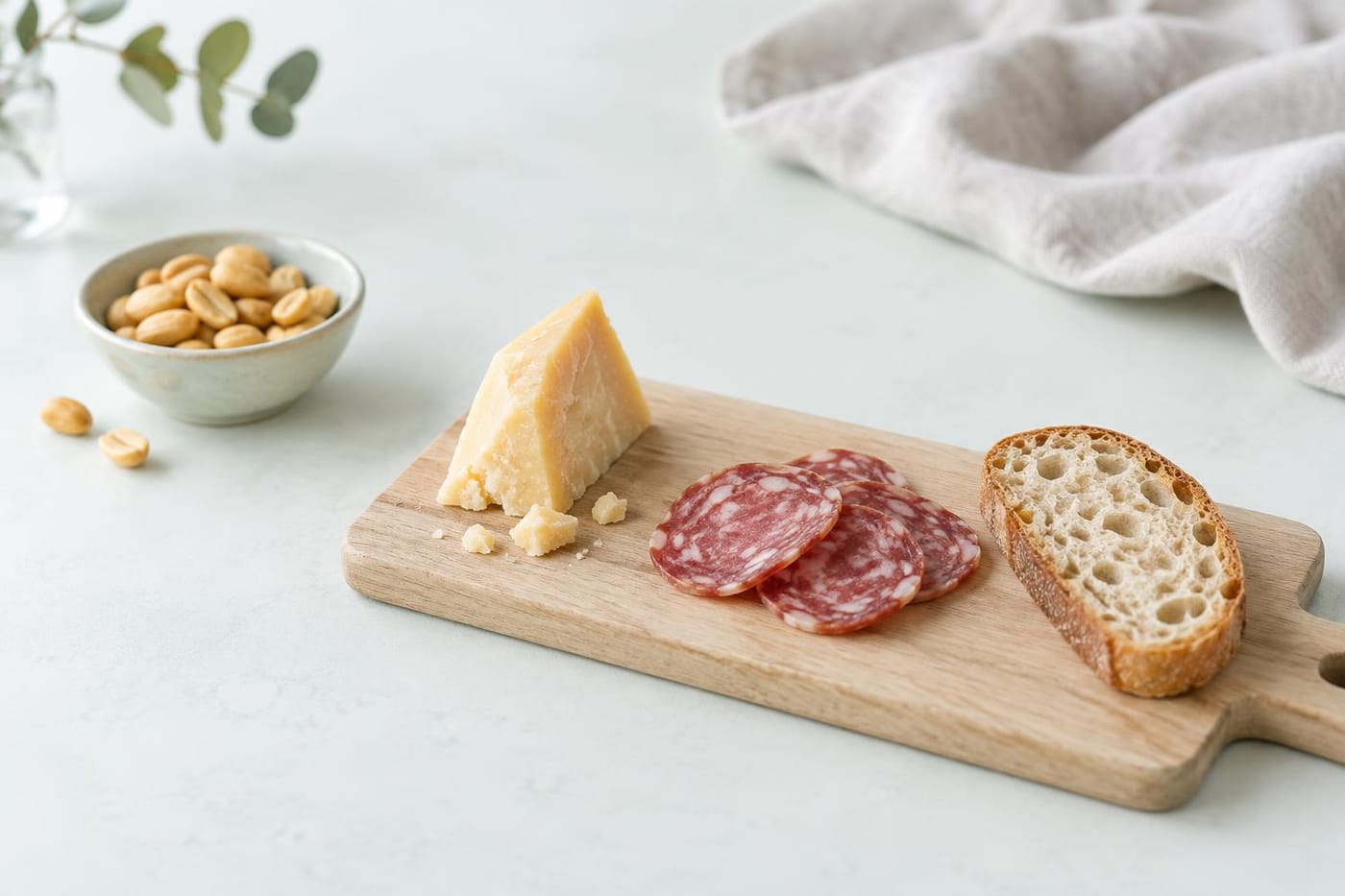
On an alkaline diet, you should mainly cut back on meat, sausage, hard cheese, white flour products, sugar, soft drinks and alcohol. Meat, sausage and hard cheese have high positive PRAL values and put a strain on your acid-base balance. White flour products have slightly positive values. Sugar, soft drinks and alcohol sit around zero by PRAL and matter for other reasons. You don’t need to give anything up completely. The rule of thumb: 70% alkaline, 30% acid-forming. You can safely skip total bans.
What actually makes a food acidic?
Acid-forming is not the same as tasting sour. A lemon tastes very sour, but it has an alkalizing effect in the body. What counts is what is left after digestion: if a food leaves an acid load for your kidneys, it is acid-forming. That is exactly what the PRAL value (potential renal acid load) measures. Positive PRAL values mean acid-forming, negative values mean alkalizing. The higher the positive value, the more work your body has to do to neutralize it.
If you want to learn more about the background, you’ll find a full explanation and a detailed overview here: Alkaline foods: the complete list with PRAL values.
The strongest acid-formers, and why they matter so much
This is not about banning individual foods. It’s about knowing the biggest levers. Once you know the strongest acid-formers, you can balance them out more consciously.
Meat and sausage
Animal protein is the strongest acid-former of all. That makes meat the single biggest lever when you change your diet. If you skip or cut back on meat a few times a week, you noticeably change your daily PRAL without having to watch everything else. Meat is not forbidden. It’s simply the area with the biggest effect.
| Food | State | PRAL value |
|---|---|---|
| Pork chop | prepared | +13.7 |
| Chicken breast | prepared | +13.2 |
| Fried sausage | prepared | +11.3 |
| Beef, general | raw | +9.0 |
| Bavarian veal sausage | prepared | +7.5 |
Hard cheese and processed cheese
Cheese is one of the biggest surprises for many people starting an alkaline diet. Hard cheese is among the most acid-forming foods of all. Cream cheese, with values around +3.0, is much milder and easy to fit into everyday eating.
| Food | State | PRAL value |
|---|---|---|
| Parmesan cheese | raw | +29.6 |
| Gouda (young) | raw | +17.5 |
| Cream cheese | raw | +3.0 |
White flour products
White bread and toast sound moderate, and for a single serving they are. The problem is how often you eat them. If you have toast in the morning, a roll at lunch and pasta at dinner, this group alone adds up to a clearly positive daily value, without a single bite of meat.
| Food | State | PRAL value |
|---|---|---|
| White toast bread | baked | +3.9 |
| White bread | baked | +3.7 |
| Wholemeal bread | baked | +2.6 |
Sugar and sweets
Table sugar itself has a PRAL close to zero. The real issue is the combinations: sweets are rarely just sugar. They contain flour, milk and other ingredients that add up. Sugar also promotes inflammation, which, regardless of PRAL, can be relevant for complaints like reflux or skin problems.
Soft drinks and alcohol
Coke and similar drinks have PRAL values around +0.5. That sounds small, but it becomes relevant because of the large amounts people drink. Beer and wine are neutral to slightly alkaline by PRAL, but alcohol puts a strain on your body through its dehydrating effect.
💡 Remember
None of these foods has to be cut out completely. If you eat mostly alkaline foods at breakfast and lunch, you can be more relaxed at dinner without tipping your daily balance.
The gray areas, often misunderstood
Many people worry about foods that aren’t really a problem. Here’s a look at the most common misunderstandings.
Milk and yogurt
Plain yogurt (3.5%) has a PRAL of +0.5, so it’s almost neutral. If you eat yogurt for breakfast, you don’t need to worry about it. Greek yogurt, at +0.2, is even a bit lower and far from the values of hard cheese.
Eggs
Eggs are acid-forming, but how strongly depends a lot on the part. Egg yolk has a PRAL of +24.6, while egg white is only +2.1. A whole egg therefore sits in the moderately acid-forming range. Two eggs for breakfast are no problem if the rest of your day is clearly alkaline.
Whole grain products
Wholemeal bread comes in at +2.6. That’s even lower than white wheat bread and far from the heaviest acid-formers like meat and hard cheese. Whole grain products are also richer in nutrients than white flour alternatives, which makes them the better choice.
Legumes
Here’s a pleasant surprise: white beans (boiled) have a PRAL of −1.2, which makes them slightly alkaline. Lentils (boiled) come in at +3.1, so they are slightly acid-forming but very moderate. Most legumes are good protein sources with an acceptable to positive PRAL.
Now for the five questions people ask most often about the alkaline diet.
FAQ: The 5 most common questions
Is rice acidic or alkaline?
White rice (cooked) has a PRAL of +1.8, so it’s slightly acid-forming. Brown rice (cooked) comes in at +1.9. Rice is not a strong acid-former and is nothing like meat or hard cheese. If you pair rice with plenty of vegetables, you’ll easily stay in the alkaline range overall. What matters is always the overall balance of your day, not a single food.
Are eggs alkaline or acidic?
Eggs are acid-forming. Egg yolk has a PRAL of +24.6, egg white +2.1. A whole egg therefore sits in the moderately acid-forming range. That doesn’t mean eggs have to disappear from your menu. You can easily balance two eggs for breakfast with alkaline foods like spinach (fresh: −12.2), tomatoes (−4.2) or avocado (−9.9) on the same day.
Are potatoes alkaline or acidic?
Potatoes are a very pleasant surprise: they are alkalizing. Boiled potatoes have a PRAL of −6.5, mashed potatoes −3.7. That makes potatoes one of the few truly filling foods with a negative PRAL. Boiled or baked, they stay alkaline, and even potato chips are alkaline by PRAL (−17.0). But chips bring so much fat and salt that they are still not a good choice. Why the PRAL doesn’t capture that: Alkaline doesn’t mean healthy.
Which bread is alkaline?
No regular bread is truly alkaline, but there are big differences. White bread comes in at +3.7, white toast bread at +3.9, wholemeal bread at +2.6. The most alkaline bread in the database is buckwheat bread at +0.2. Among everyday breads, crispbread (+1.6) and pumpernickel (+2.3) are the lowest. If you eat little bread and top it with plenty of vegetables or avocado, you can easily keep bread in your daily routine.
Is coffee alkaline or acidic?
Coffee is surprisingly alkaline. Black coffee has a PRAL of −2.3, espresso −1.9. So coffee is definitely not a problem on an alkaline diet, as long as you drink it black or with a little milk. If you drink coffee with lots of sugar and cream, the balance shifts, but even then the effect stays small. One to two cups a day make hardly any difference to your daily balance.
The key takeaway: it’s about the day, not individual meals
Nobody has to weigh every bite. The alkaline diet works as a trend, not as perfection. If your breakfast is mostly alkaline, your lunch plate has plenty of vegetables and you stay flexible at dinner, you’re usually in good shape.
The problem isn’t a single egg or a cup of coffee. The problem is when breakfast, lunch and dinner are all clearly acid-forming, without a single alkaline counterweight. Then your daily PRAL adds up to a positive number, and that’s exactly what you want to avoid.
If you want to discover more alkaline foods that actively contribute to a negative daily PRAL, here’s the right overview: What can you eat on an alkaline diet?
Keep track without doing the math every day.
You enter your meals, and Basentracker calculates the PRAL automatically and shows your daily value at a glance. Over 950 foods, consistent scientific values, no math and no guesswork.
Free for Android · iPhone coming soon
Summary
There are no absolute bans on an alkaline diet. The strongest acid-formers are meat, hard cheese and white flour products eaten often. These are the areas with the biggest lever. Rice, eggs, potatoes, bread and coffee are no reason to worry if the rest of your day leans alkaline. If you want to keep track without doing the math every day, Basentracker now gives you a reliable tool for it.
You’ll find more alkaline foods and what you can actively eat here: What can you eat on an alkaline diet?