Alkaline Foods Chart: Full PRAL List of 40+ Foods (2026)
Basentracker Team
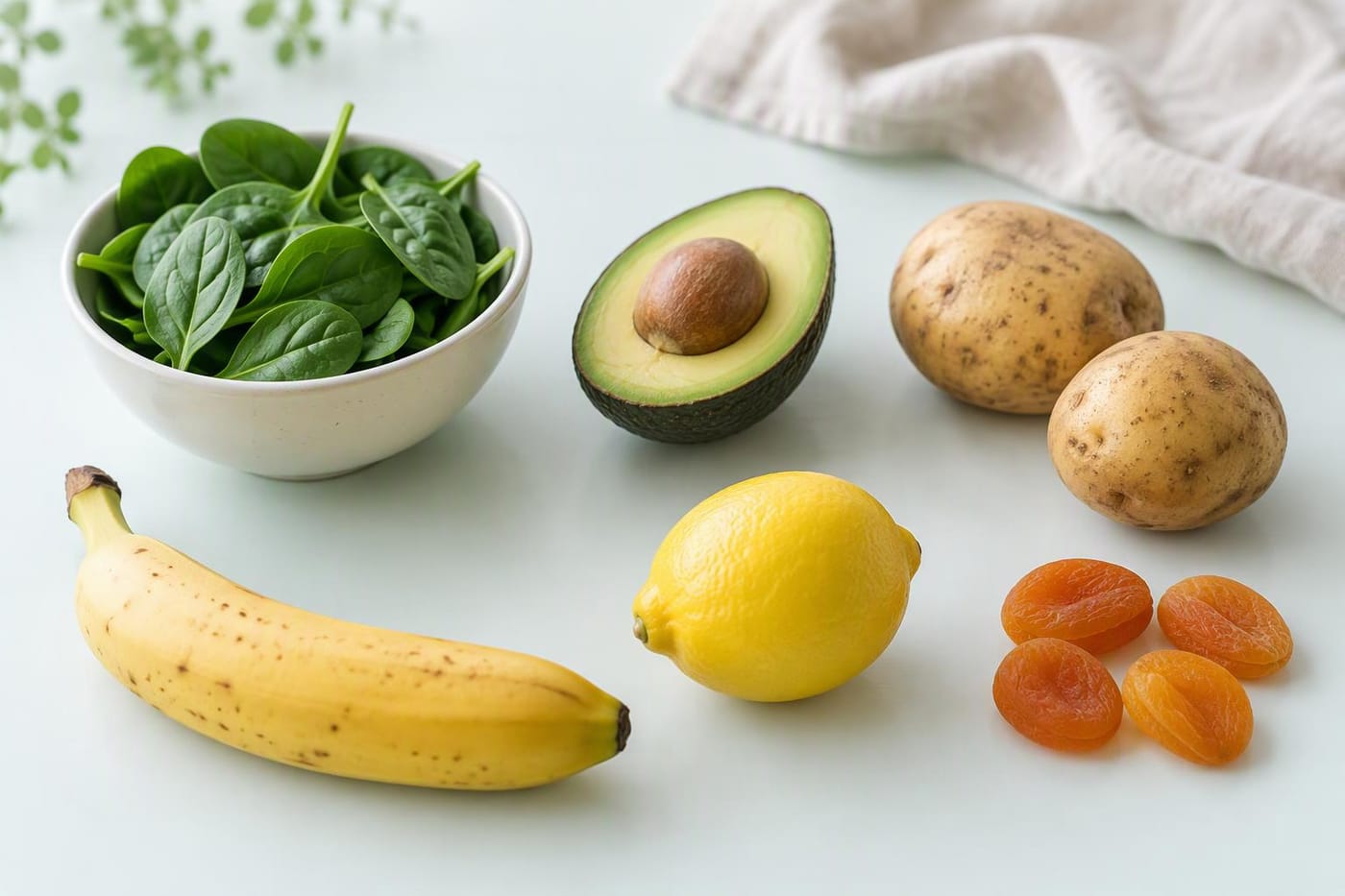
Picture yourself at the grocery store, holding a cup of yogurt. You just read that an alkaline diet is supposed to be good for you, but now you’re wondering: Is yogurt good or bad? Or you remember reading somewhere that lemons are alkaline, even though they clearly taste sour. That makes no sense, and you’re not the only one who gets confused at this point.
This confusion is what makes most people give up sooner or later. It’s not a lack of motivation. It’s the chaos of contradictory information. This article clears that up. You get a clear, easy-to-read chart with concrete values, a simple explanation of what’s behind them, and an honest answer on how to use all this in everyday life, without stress and without perfectionism.
What does alkaline actually mean?
Your body is a master at keeping itself in balance. Your blood pH, for example, always stays within a very narrow range. That is vital, and your body regulates it strictly. What you can influence with your diet is not your blood pH itself, but how much work your body has to do to keep it there.
When you eat a lot of acid-forming foods, such as meat, cheese and white bread, your kidneys have to excrete more acid and your urine becomes more acidic. When you eat plenty of alkaline foods like vegetables and fruit, you take load off your body. Your urine becomes more alkaline and your whole metabolism runs more smoothly. That’s really all you need to know at this point. No chemistry lecture, no finger-wagging.
What is PRAL, and why does it matter more than taste?
This is the real secret behind the lemon confusion. How a food tastes tells you absolutely nothing about how it acts in your body. A lemon tastes sour, but it has a strongly alkaline effect in the body. How is that possible?
The answer is PRAL. PRAL stands for potential renal acid load, the potential acid load a food puts on your kidneys. Nutrition scientists Remer and Manz developed this value in the 1990s. It describes how a food acts in the body after it has been metabolized, not how it tastes.
Remember: The more negative the PRAL, the more alkaline the food’s effect in your body. The more positive, the more acid is produced during digestion.
Back to the lemon: Its PRAL is −4.0, so it is alkalizing, even though it tastes sour. That’s because it contains a lot of potassium and magnesium, which form alkaline compounds after they are metabolized. At the same time, some foods sound harmless, rolled oats for example, but with a PRAL of +6.8 they are clearly acid-forming.
💡 Rule of thumb
Taste can fool you. The PRAL can’t. That’s the only difference you need to remember.
The chart of alkaline and acidic foods
The values in the following chart come directly from the Basentracker app and were calculated with the scientific Remer & Manz formula. A negative value means alkalizing, a positive value means acid-forming, measured per 100 g of the food.
🌿 Strongly alkaline — PRAL below −5
| Food | PRAL (per 100 g) |
|---|---|
| Dried figs | −17.8 |
| Dates (dried) | −13.4 |
| Raisins | −12.7 |
| Spinach (fresh) | −12.2 |
| Avocado | −9.9 |
| Celeriac (raw) | −8.3 |
| Swiss chard | −7.8 |
| Apricots (fresh) | −7.2 |
| Arugula (fresh) | −7.1 |
| Potato (boiled) | −6.5 |
| Banana | −6.4 |
| Carrots (raw) | −6.3 |
| Broccoli | −6.1 |
🥗 Slightly alkaline — PRAL −5 to 0
| Food | PRAL (per 100 g) |
|---|---|
| Tomatoes | −4.2 |
| Zucchini | −3.7 |
| Red bell pepper | −3.5 |
| Cucumber | −3.3 |
| Strawberries | −3.0 |
| Oranges | −2.8 |
| Coffee (black, unsweetened) | −2.3 |
| Lemon juice | −2.3 |
| Apples | −1.9 |
| Watermelon | −1.7 |
| Red wine | −1.6 |
| Blueberries | −1.3 |
⚖️ Neutral — PRAL around 0
| Food | PRAL (per 100 g) |
|---|---|
| Herbal tea | −0.3 |
| Water (still) | −0.2 |
| Sugar | 0.0 |
| Olive oil | 0.0 |
| Whole milk | +0.1 |
⚠️ Slightly acidic — PRAL 0 to +5
| Food | PRAL (per 100 g) |
|---|---|
| Coke | +0.5 |
| Yogurt (3.5% fat) | +0.5 |
| Butter | +0.9 |
| White rice (cooked) | +1.8 |
| Wholemeal bread | +2.6 |
| White bread | +3.7 |
🔴 Strongly acidic — PRAL above +5
| Food | PRAL (per 100 g) |
|---|---|
| Rolled oats | +6.8 |
| Beef (lean) | +9.0 |
| Quark (low-fat) | +9.4 |
| Eggs | +10.6 |
| Tuna (canned) | +12.0 |
| Mozzarella | +12.7 |
| Chicken breast | +13.2 |
| Sausage (salami) | +14.5 |
| Hard cheese (cheddar) | +16.9 |
| Hard cheese (Parmesan) | +29.6 |
ℹ️ About the values
The PRAL values in this chart come directly from the Basentracker app and were calculated with the scientific formula by Remer & Manz. Small differences are possible depending on growing method, variety or degree of processing.
The most common myths about the alkaline diet
There are a lot of half-truths about the alkaline diet online. Here are the three you’ll run into most often.
Myth 1: “Tastes sour = acid-forming”
This is the classic misunderstanding. Taste decides nothing. Lemon juice tastes sour, but it has a PRAL of −2.3, so it clearly has an alkaline effect in the body. The only thing that matters is what happens after digestion, and that’s what the PRAL shows.
Myth 2: “Eating healthy automatically means eating alkaline”
Sadly, no. Rolled oats for breakfast are rightly considered healthy, but with a PRAL of +6.8 they are clearly acid-forming. The same goes for quark (a fresh, high-protein dairy product similar to strained yogurt), wholemeal bread or eggs. That doesn’t make them bad foods, but it shows that “healthy” and “alkaline” are not the same thing.
Myth 3: “You have to cut out acid-forming foods completely”
That would be neither realistic nor necessary. What matters is the balance over the day, not perfection at every meal. A steak for dinner is no problem if the rest of your day was alkaline. The overall balance counts, not any single choice.
How do I use this chart in everyday life?
The good news: You don’t have to memorize a single number. What counts is the big picture over the day, not whether every single food is perfect.
A simple rule of thumb that works well in practice: Eat alkaline for about two-thirds of the day, and one-third can be acid-forming. That means you can keep your morning coffee and have chicken for dinner. As long as you consistently go for vegetables, fruit and alkaline ingredients at breakfast and lunch, your daily balance will usually be on the favorable side by evening.
If you eat alkaline consistently at breakfast and lunch, you’ve almost won by evening, no matter what’s on the grill.
The hard part isn’t knowing this. It’s keeping track. If you honestly want to know whether your day was really alkaline, you need to keep some kind of record. That’s where most people fail, not because of discipline, but because of the effort. A chart on the fridge helps in the short term. Spreadsheets stop getting opened after a week. What really works in everyday life has to take seconds, not minutes.
This table shows you the way. The Basentracker app walks it with you.
Log your meals, and the app calculates the PRAL automatically and shows your daily balance at a glance. Over 950 foods, consistent scientific values, no math and no guesswork.
Free for Android · iPhone coming soon
What you know now
The alkaline diet is less complicated than the internet makes it seem, but more complicated than meets the eye. Taste is misleading, charts contradict each other, and some foods will surprise you. The PRAL gives you a reliable, science-based foundation that is calculated with the same formula for every food.
The chart in this article gives you a solid start. If you want to make this a consistent part of your everyday life, you don’t need a memorized set of rules. You need a tool that thinks along with you and gives you a clear answer at the end of the day: alkaline or acidic.