10 Most Alkaline Vegetables Ranked by PRAL (With Table)
Basentracker Team
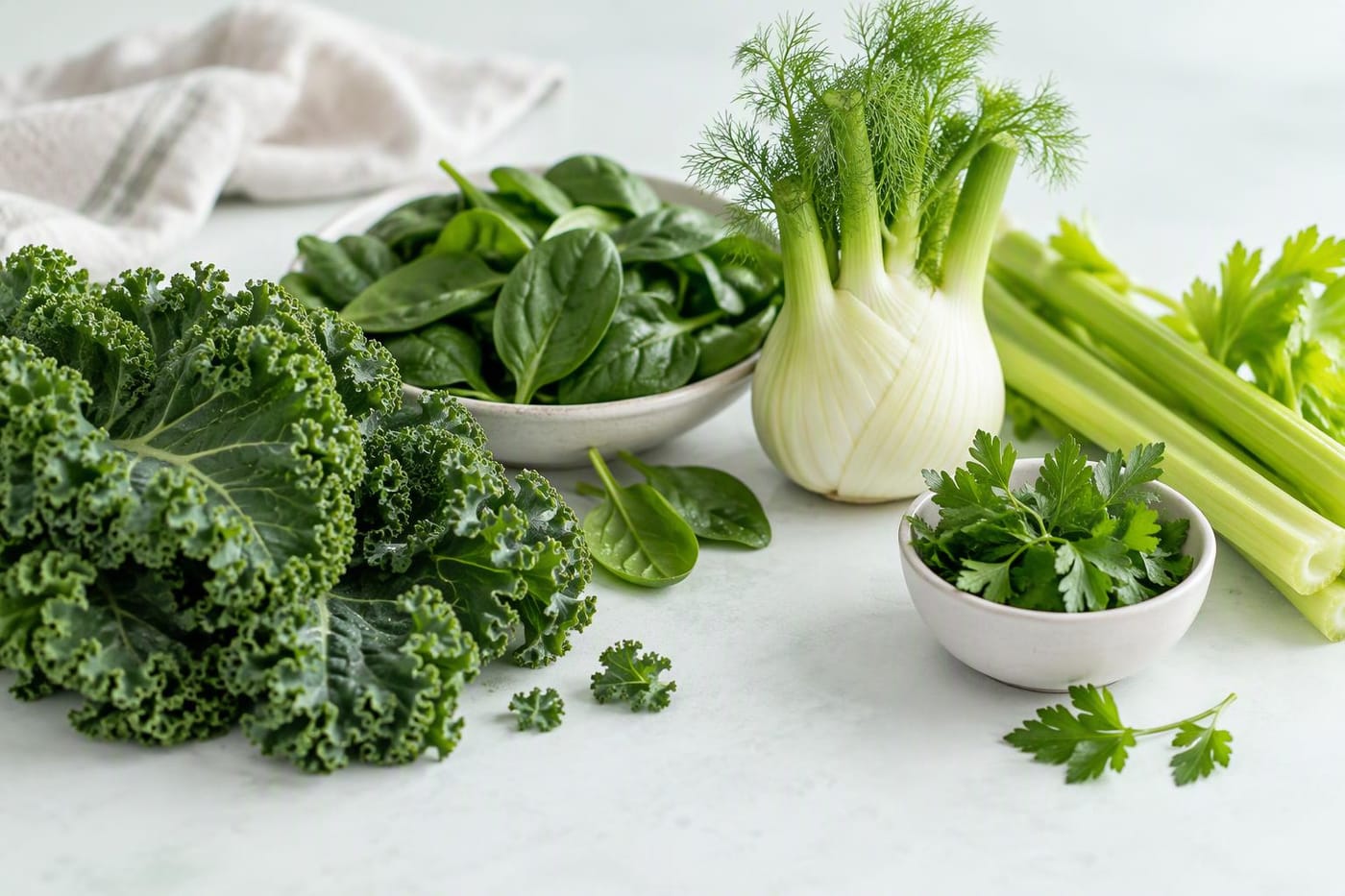
The most alkaline vegetables by PRAL are spinach, kale, lamb’s lettuce, Swiss chard, arugula, potatoes, fennel, carrots, broccoli and Brussels sprouts. All of them have a clearly negative PRAL, which means they have an alkalizing effect in the body. Spinach tops the ranking with a PRAL of −12.2.
Why vegetables are your biggest lever on an alkaline diet
You’re standing in the produce aisle and wondering: Is spinach really more alkaline than broccoli, or does it not matter in the end? It does matter. The difference between the most alkaline and the less alkaline vegetables can be a factor of three or four. If you shop with this in mind, you get a lot more out of the same meals.
Vegetables are the food group with the lowest PRAL values of all. If you want to improve your daily balance, the fastest way is to put more vegetables on your plate, not to cut out other foods. The principle: add instead of remove.
ℹ️ PRAL explained
We explain in detail what PRAL means and how it is calculated here: Alkaline foods: the complete list with PRAL values
The ranking: the 10 most alkaline vegetables
The order is based on the exact PRAL values from the Basentracker database. All values refer to 100 g of the food in the state listed.
Spinach (fresh)
PRAL −12.2Spinach is the most alkaline everyday vegetable in the Basentracker database. The reason is its exceptionally high potassium and magnesium content, two minerals that pull the PRAL especially far into negative territory. Fresh spinach (PRAL −12.2) and cooked spinach (PRAL −12.9) are almost even, and cooked spinach is actually a little lower. So it is alkaline both raw and cooked.
Kale (fresh)
PRAL −11.7Kale has earned its superfood reputation. At PRAL −11.7, it comes in just behind spinach, and its nutrient density is impressive: plenty of potassium, calcium, magnesium and vitamin C. A big practical plus is that kale hardly loses its alkaline character when cooked, which makes it very versatile.
Lamb's lettuce (fresh)
PRAL −8.3Lamb’s lettuce is one of the most alkaline salad greens in the database and ranks even ahead of arugula. At PRAL −8.3, it is well beyond what most other salad greens reach. It has a mild flavor, is especially affordable in winter, and is an easy way to make your salad base more alkaline without changing the taste much.
Swiss chard (fresh)
PRAL −7.8Swiss chard is the underrated relative of spinach and belongs to the same plant family. At PRAL −7.8, it is clearly behind kale but ahead of broccoli and carrots. It is rich in potassium, magnesium and calcium. You can almost always find it at the farmers’ market, but in supermarkets it often gets overlooked.
Arugula (fresh)
PRAL −7.1Arugula is one of the top performers among salad greens, yet it is often underrated. At PRAL −7.1, it clearly beats iceberg and romaine and narrowly beats regular lettuce. Its slightly bitter taste comes from plant compounds that also have an anti-inflammatory effect. So an arugula-based salad is not only more flavorful, it also has a much stronger alkaline effect.
Potato (boiled)
PRAL −6.5Potatoes are often underrated in nutrition debates or even labeled as unhealthy. Yet boiled potatoes, at PRAL −6.5, are clearly alkalizing. Their high potassium content is what gives them a negative PRAL. Preparation hardly matters: boiled and baked potatoes are alkaline, and even French fries are alkaline by PRAL, but they come with a lot of fat and salt.
Fennel (fresh)
PRAL −6.5Fresh fennel reaches PRAL −6.5, which is much more than many people would expect. Its slight anise flavor doesn’t make it everyone’s first choice, but if you like it, you get one of the most alkaline vegetables in the ranking. Fennel is also especially rich in fiber and supports digestion.
Carrot (fresh)
PRAL −6.3The carrot is the everyday vegetable par excellence and makes the ranking at PRAL −6.3. It brings almost as much potassium as the potato, but hardly any protein or phosphorus. Carrots are cheap all year round, keep for a long time in the fridge, and work just as well raw in a lunchbox as in soups and roasted vegetables.
Broccoli (fresh)
PRAL −6.1Raw broccoli, at PRAL −6.1, is clearly alkaline and also provides plenty of vitamin C. When boiled, however, it loses a large part of its alkaline effect: boiled broccoli is listed in the database at only PRAL −1.3, because about half of the potassium is lost in the process. So with broccoli, how you prepare it really makes a difference.
Brussels sprouts (fresh)
PRAL −5.6Brussels sprouts round out the ranking and are more alkaline than many better-known vegetables such as tomatoes, zucchini or cauliflower. Fresh, they have a PRAL of −5.6, are rich in vitamin C and potassium, and are especially affordable in fall and winter. A typical winter vegetable that deserves more attention in everyday cooking.
All 10 at a glance
| Rank | Vegetable | PRAL per 100 g |
|---|---|---|
| 1 | Spinach (fresh) | −12.2 |
| 2 | Kale (fresh) | −11.7 |
| 3 | Lamb's lettuce (fresh) | −8.3 |
| 4 | Swiss chard (fresh) | −7.8 |
| 5 | Arugula (fresh) | −7.1 |
| 6 | Potato (boiled) | −6.5 |
| 7 | Fennel (fresh) | −6.5 |
| 8 | Carrot (fresh) | −6.3 |
| 9 | Broccoli (fresh) | −6.1 |
| 10 | Brussels sprouts (fresh) | −5.6 |
Note: PRAL is given per 100 g of the food. The more of a vegetable you eat, the bigger its effect on your daily balance.
How do I combine these vegetables in everyday meals?
The most alkaline salad base
Use equal parts arugula and lamb’s lettuce as the base, then add fresh spinach and thin slices of fennel. Dressing: lemon juice and olive oil. One of the most alkaline everyday salads you can put together without any special ingredients.
The alkaline dinner
A baked potato with sautéed Swiss chard and roasted Brussels sprouts. Three vegetables from the ranking on one plate, ready in about 40 minutes.
The alkaline boost between meals
Raw carrot and kohlrabi sticks with a small glass of carrot juice (PRAL −3.8). Prep time: two minutes. It keeps you full, costs almost nothing, and is one of the most alkaline snack combinations you can make with no effort.
What about other popular vegetables?
Sweet potatoes, zucchini, bell peppers and cucumbers are alkaline diet classics and highly recommended. With their PRAL values, though, they don’t make the top 10, simply because other vegetables are stronger. That doesn’t change the fact that they are all alkaline and belong on your plate every day:
| Vegetable | PRAL |
|---|---|
| Sweet potato (boiled) | −5.3 |
| Tomato (fresh) | −4.2 |
| Zucchini (fresh) | −4.1 |
| Cauliflower (fresh) | −3.6 |
| Red bell pepper (fresh) | −3.5 |
| Cucumber (fresh) | −3.3 |
| Kohlrabi (boiled) | −2.5 |
| Onion (fresh) | −2.4 |
| Green peas (fresh) | −1.9 |
You can eat all of these vegetables every day without worry. Even fresh green peas are alkaline at PRAL −1.9; boiled, they sit just in positive territory at +0.7, which makes no difference in practice.
More on alkaline foods for everyday eating: What can you eat on an alkaline diet?
Which foods you may want to cut back on: What should you avoid on an alkaline diet?
Basentracker does the math for you
Now you know which vegetables are the most alkaline. But how much spinach or kale do you need to keep your day truly alkaline?
Now you know which vegetables are the most alkaline.
But how much spinach or kale do you need to keep your day truly alkaline? Basentracker calculates it automatically, for all foods, not just vegetables. Just enter what you ate and see your daily PRAL at a glance. More than 950 foods are already in the database, all calculated with the same scientific formula.
Free for Android · iPhone coming soon
Bottom line: two or three of these vegetables are enough
Spinach, kale and lamb’s lettuce lead the ranking, but all ten vegetables on this list are easy to fit into everyday meals. If you add spinach to your smoothie in the morning, choose arugula or lamb’s lettuce as your salad base at lunch, and put potatoes, broccoli or Brussels sprouts on your plate at dinner, you’ll noticeably change your daily PRAL.
No complete diet overhaul needed. Just a slightly more mindful choice in the produce aisle.