Osteoporosis Diet: Calcium, Protein and the Acid-Base Theory
Basentracker Team
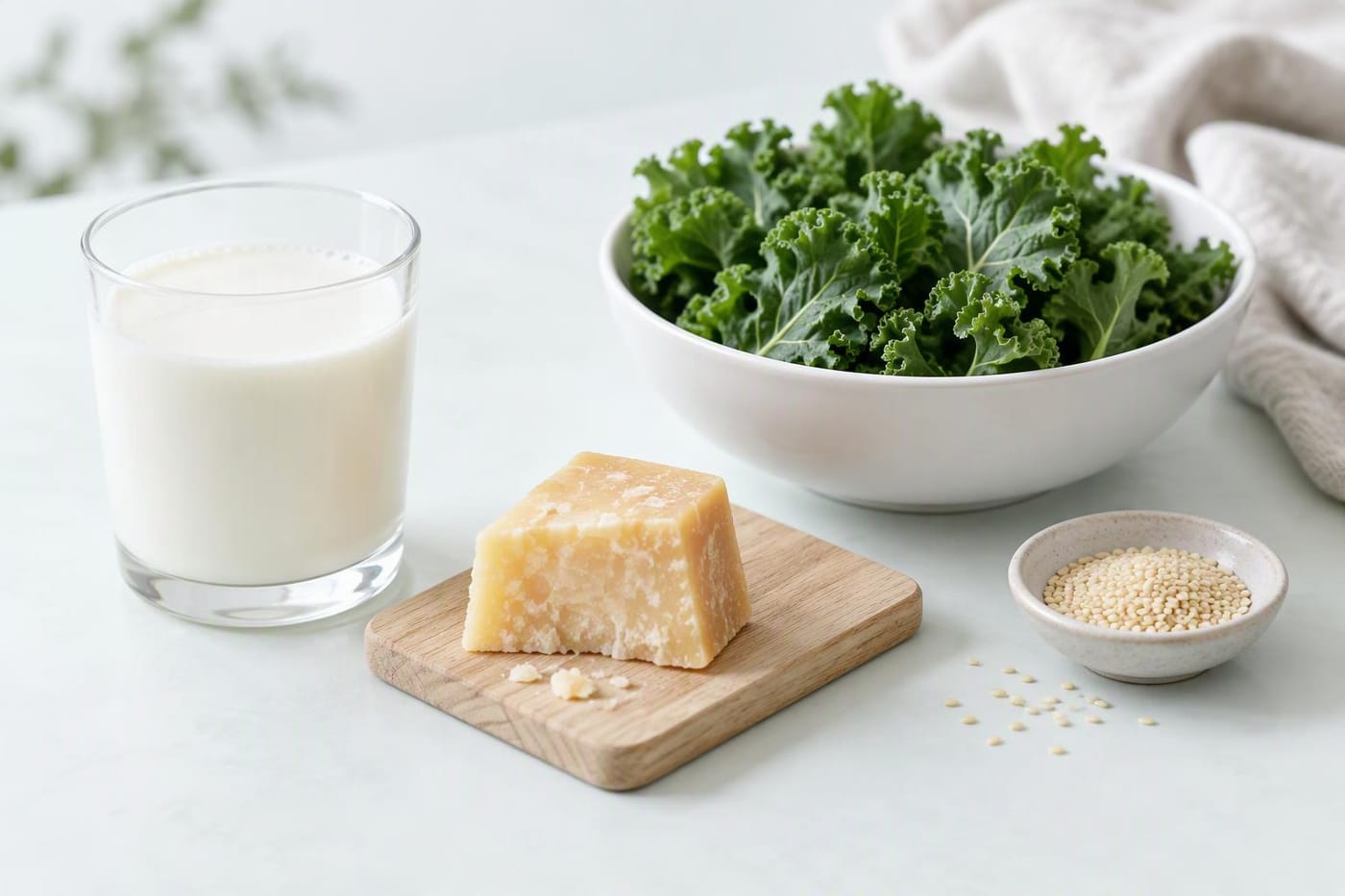
For your bones, these matter, in this order: 1,000 to 1,200 mg of calcium a day from food, vitamin D (sunlight, oily fish, and if needed 800 to 1,000 IU as a supplement), 1 g of protein per kg of body weight, little salt, no smoking, little alcohol, and plenty of vegetables and fruit for potassium, magnesium and vitamin K. The old theory that acid-forming foods leach calcium from your bones has not held up in studies: cheese and meat do not harm your bones, and protein helps them. What is true about the acid-base idea is the benefit of vegetables and fruit.
What your bones need
Bone is living tissue that is constantly broken down and rebuilt. Until about age 30, building up outweighs breakdown. After that, breakdown dominates, and in women it speeds up after menopause. Osteoporosis means bone density has dropped so far that bones can break under minor stress. Diet can slow bone loss and support the effects of medication and exercise.
Calcium is the building material: 1,000 mg a day for adults, 1,200 mg after menopause and from age 65. You will find the best sources in the table of calcium-rich foods. Calcium is absorbed better when you spread it over the day than in a single serving. Your gut can’t use more than 500 mg at once.
Vitamin D controls absorption. From October to March, the sun in Germany isn’t strong enough. Oily fish (salmon, herring, mackerel) and eggs provide some, and a supplement with 800 to 1,000 IU usually makes sense. Have your level tested.
Protein is the matrix that calcium is built into. Aim for 1.0 to 1.2 g per kg of body weight, so 70 to 85 g a day if you weigh 70 kg. Older people often eat too little of it, which weakens bones and muscles at the same time. Dairy, legumes, fish, eggs, and meat in moderation.
Vitamin K, magnesium and potassium from green vegetables, nuts, whole grains and fruit improve how calcium is built into bone and reduce calcium excretion.
Does acid leach calcium from your bones? What the studies say
The theory sounds plausible: an acid-forming diet forces the body to buffer acid, and it takes calcium from the bones to do so. It is true that calcium excretion in the urine rises on a high-protein diet. For decades, people concluded from this that meat and cheese demineralize your bones.
The math has a gap that only showed up in balance studies: on a high-protein diet, calcium absorption in the gut also rises, by about the same amount. The extra calcium in the urine comes from food, not from bone. A 2009 meta-analysis of all available studies found no link between dietary acid load and bone density or fractures. In later studies, protein even showed a protective effect, especially in older people and with enough calcium.
What this means in practice:
- Cheese remains the most calcium-rich food group, despite PRAL values often above +15. One slice of Emmental cheese covers a third of your daily requirement.
- Cutting protein is a mistake. Too little protein is worse for your bones than too much.
- Vegetables and fruit still matter, but for other reasons: potassium, magnesium, vitamin K, and vitamin C for collagen formation. In observational studies, people who eat a lot of vegetables and fruit have denser bones.
ℹ️ What's left of the acid-base idea
Avoiding acid is not what protects your bones. Getting enough of the alkalizing minerals is: potassium and magnesium from vegetables and fruit. A diet with a low PRAL is therefore bone-friendly, but because of what it contains, not because of what it leaves out.
What harms your bones
Salt. Every gram of table salt pulls about 20 mg of calcium into the urine. At 10 g of salt a day, the German average, that is 200 mg, one fifth of your daily requirement. Stay under 6 g.
Alcohol beyond one glass a day slows down bone-building cells and calcium absorption. Smoking lowers bone density significantly and doubles the risk of fractures.
Cola in large amounts is suspected of lowering bone density through phosphoric acid and caffeine. The effect in studies is weak, but it matters if you drink a liter every day. Coffee in normal amounts (up to 4 cups) is fine as long as you get enough calcium.
Oxalate and phytate bind calcium in the gut: spinach provides a lot of calcium, but only about 5 percent of it is absorbed. Kale, broccoli and bok choy, with 50 to 60 percent absorption, are the better plant sources.
Crash diets and being underweight. Rapid weight loss costs bone mass, and a BMI under 20 is a risk factor in its own right.
Calcium sources with PRAL
| Food | Calcium per 100 g | PRAL per 100 g | Rating |
|---|---|---|---|
| Emmental cheese | 1,160 mg | +21.0 | best source, serving 30 g |
| Gouda | 860 mg | +17.5 | serving 30 g |
| Mozzarella | 380 mg | +12.7 | serving 60 g |
| Low-fat milk | 120 mg | +0.1 | glass of 250 ml = 300 mg |
| Plain yogurt | 110 mg | +0.5 | 150 g cup = 170 mg |
| Kale, fresh | 290 mg | −11.7 | well absorbed, alkaline |
| Arugula, fresh | 220 mg | −7.1 | alkaline |
| Dried fig | 230 mg | −17.8 | alkaline, high in sugar |
| Sesame seeds | 780 mg | +3.9 | tablespoon = 80 mg |
| Hazelnuts | 150 mg | −3.2 | handful = 40 mg |
| Almonds | 85 mg | +10.5 | less than often assumed |
| Broccoli, fresh | 43 mg | −6.1 | well absorbed, alkaline |
| Spinach, fresh | 81 mg | −12.2 | poorly absorbed (oxalate) |
| Mineral water, calcium-rich | 15 to 60 mg | −0.2 | 1.5 l = up to 900 mg |
Nutrient values and PRAL: Basentracker food database (German Nutrient Database, Bundeslebensmittelschlüssel 4.0, and other sources; see sources). Calcium for mineral water: typical label values of calcium-rich brands.
A bone-friendly day
- Breakfast: Yogurt with rolled oats, almonds and berries. A glass of milk or calcium-rich mineral water.
- Lunch: Salmon with broccoli and potatoes, salad with arugula and olive oil.
- Afternoon: Cheese sandwich (wholemeal bread, 30 g Emmental cheese), an apple.
- Dinner: Kale with potatoes and lentils, or scrambled eggs with spinach (spinach for flavor and potassium; the calcium comes from the egg and the cheese).
- Throughout the day: 1.5 liters of calcium-rich mineral water, weight-bearing exercise (walking, stairs, strength training).
That adds up to about 1,200 mg of calcium, 80 g of protein and a PRAL below zero: dairy and fish on one side, vegetables and potatoes on the other.
Bottom line
An osteoporosis diet is calcium plus vitamin D plus protein plus vegetables, with less salt, alcohol and nicotine. The PRAL is not a reason to ban foods here: cheese and fish belong on your plate, with plenty of vegetables and fruit next to them. If you eat this way, you automatically end up with a balance around zero or below, and you give your bones everything they need.
Keep calcium sources and vegetables in balance.
The app shows you for each day whether cheese, fish and meat are balanced out by vegetables, potatoes and fruit.
Free for Android · iPhone coming soon