Is Cheese Acidic or Alkaline?
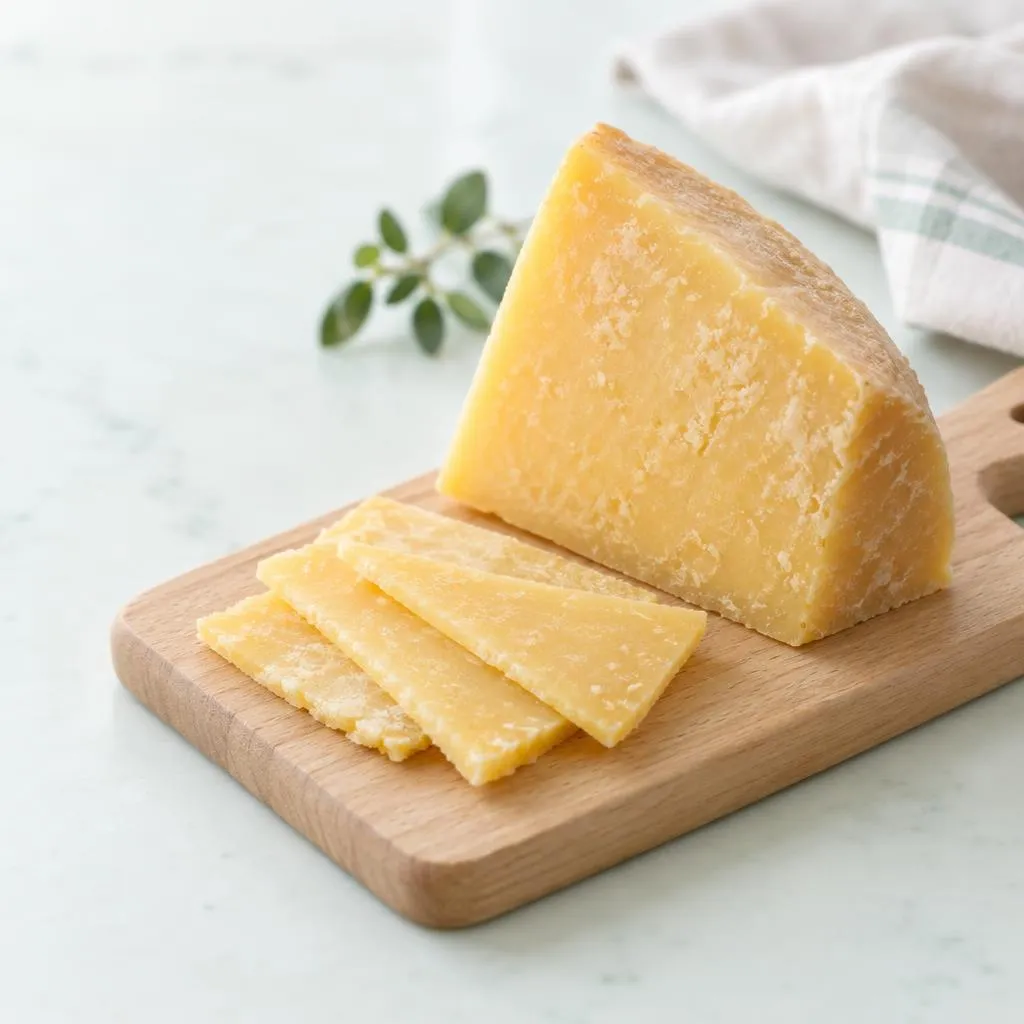
Yes, acid-forming. Cheese is the most acid-forming everyday food, with Gouda at +17.5, Emmental at +21.0 and Parmesan at +29.6 per 100 g; only cream cheese (+3.0) is mild.
Why cheese is acid-forming
Cheese is concentrated milk protein with a lot of phosphorus. As it ripens, it loses water, so the content per 100 g rises even further. That is why the rule is simple: the harder and older the cheese, the higher its PRAL. Hard cheese ranks above meat (+11 to +14) and cooked fish (+4 to +15).
A single 30 g slice of Gouda adds +5.3, and a cheese sandwich made with two slices on one slice of wholemeal bread comes to about +11.8. That is almost as much as a 100 g steak (+12.9). If you love cheese, you don't have to cut it out. But treat it as what it is in your daily balance: the biggest item of the day, one that needs to be offset with vegetables and potatoes.
Acidic or alkaline: PRAL, not pH
The PRAL (potential renal acid load) estimates what a food leaves behind after digestion. It is not the pH of the food itself: a lemon tastes sour, yet its PRAL is −4.0. If you are asking whether cheese is acidic because of heartburn or reflux, that is a question of pH and your stomach, which the PRAL does not measure; talk to your doctor about it.
Cheese in different forms: raw, cooked, processed
How the PRAL changes with state and product. All values per 100 g or 100 ml.
| Food | PRAL |
|---|---|
| Gouda (young) (raw) | +17.5 |
| Emmental cheese (raw) | +21.0 |
| Parmesan cheese (raw) | +29.6 |
| Mozzarella (raw) | +12.7 |
| Feta cheese (raw) | +11.1 |
| Camembert cheese (raw) | +15.2 |
| Cottage cheese, regular (4% fat) (raw) | +8.8 |
| Cream cheese (raw) | +3.0 |
Alkaline foods that balance it
Frequently Asked Questions
Is cheese acidic?
Yes, strongly acid-forming. Hard and semi-hard cheeses range from +16 to +30 per 100 g, soft cheeses from +9 to +15, and fresh cheeses from +3 to +10.
Which cheese is the least acidic?
Cream cheese (+3.0), ricotta (+3.4) and cottage cheese (+8.8), in that order. Fresh goat cheese comes in at +9.9.
Is vegan cheese alkaline?
It depends on the base: coconut oil-based versions are neutral (−0.2), while cashew-based ones are acid-forming (+5.0).
Cheese and everything else on your plate: calculated automatically.
Basentracker adds up the PRAL of every meal and shows whether your day is in the alkaline range. Over 950 foods, photo scan, recipes, free.
Free for Android · iPhone coming soon
More cheese compared
All cheese with their PRAL: Cheese table. Back to the overview Acidic or Alkaline?, or put together a meal in the PRAL calculator.
Source: Basentracker food database (PRAL according to Remer & Manz, calculated from protein, phosphorus, potassium, magnesium and calcium per 100 g). This information does not replace medical advice.