Kidney Stone Diet: Fluids, Salt, Oxalate and Urine pH
Basentracker Team
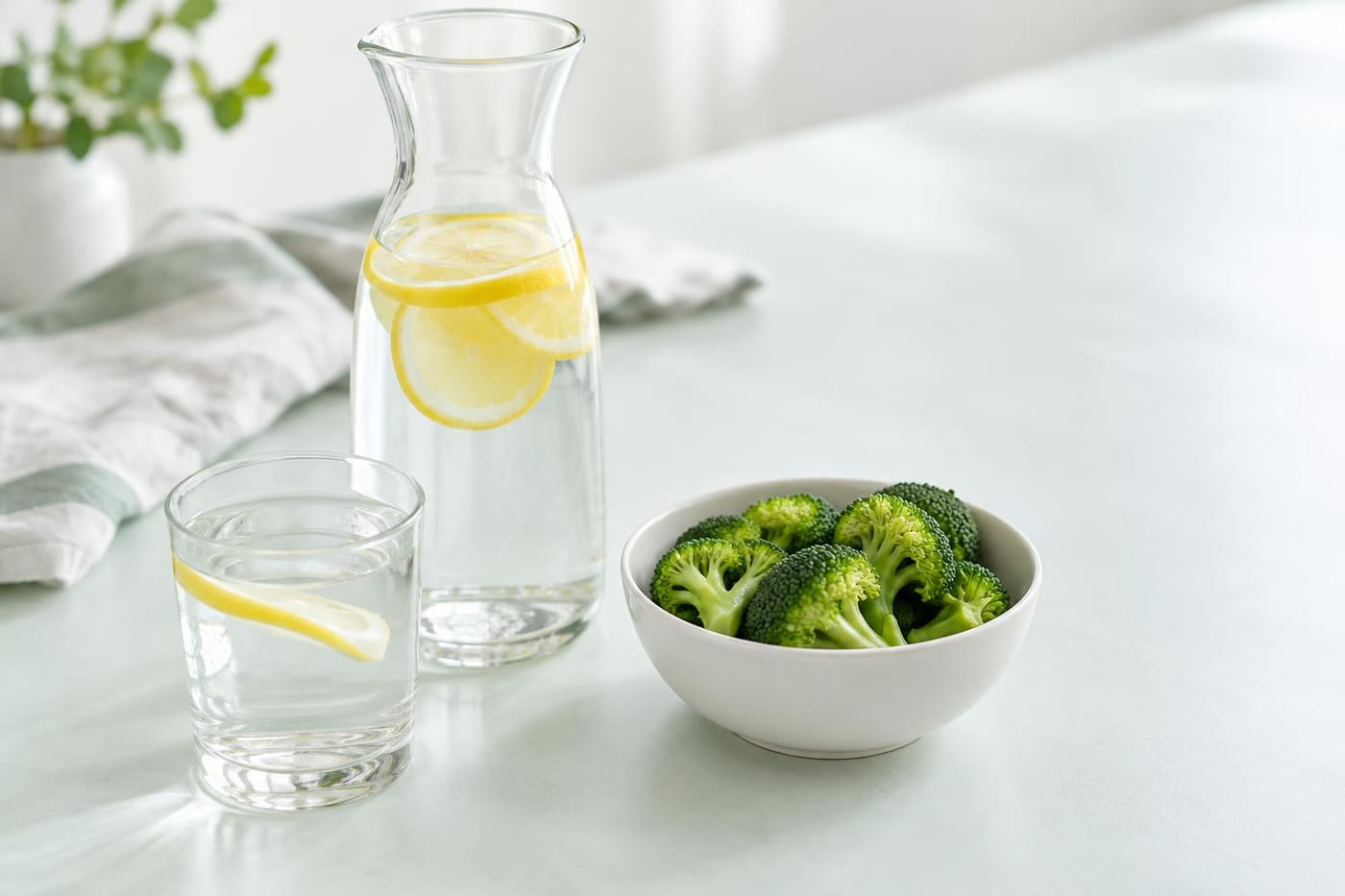
The most important step with kidney stones is drinking: 2.5 to 3 liters a day, so that you produce at least 2 liters of urine. After that come less salt (under 6 g), moderate protein (0.8 to 1 g per kg of body weight), a normal amount of calcium from food (1,000 to 1,200 mg, not less) and plenty of vegetables and fruit for potassium and citrate. Which other foods matter depends on the stone type: for uric acid stones, alkaline urine helps; for calcium oxalate stones, less oxalate; for calcium phosphate stones, your urine must not become too alkaline.
Which stone type do you have?
You can only adjust your diet in a useful way if you know the stone type. It is listed in the stone analysis report. Without an analysis, your urine pH can serve as a clue.
| Stone type | Share | Forms with | Diet aims at |
|---|---|---|---|
| Calcium oxalate | about 75% | any pH, especially with little urine, high oxalate, low citrate | drinking, moderate oxalate, normal calcium, high citrate |
| Uric acid | 10 to 15% | acidic urine below pH 5.5 | raising urine pH to 6.2 to 6.8, lowering purines |
| Calcium phosphate | 5 to 10% | alkaline urine above pH 6.5 | keeping urine pH from going above 6.5, lowering salt |
| Struvite | 5% | urinary tract infections | treating the infection; diet is secondary |
The five rules for every stone type
1. Drink, spread over the day. The goal is 2 to 2.5 liters of urine. That takes 2.5 to 3 liters of fluid, more in summer and when you exercise. Choose water, diluted juices, herbal tea and fruit tea. Have a glass before bed, because urine is most concentrated at night.
2. Salt under 6 g a day. Sodium pulls calcium into the urine with it: every extra gram of salt raises calcium excretion by about 20 mg. The biggest sources of salt are bread, cold cuts, cheese, ready meals and snacks, not the salt shaker.
3. Moderate protein, especially animal protein. 0.8 to 1 g per kg of body weight is enough. A lot of meat, fish and cheese raises the acid load, lowers citrate in the urine and increases the excretion of calcium and uric acid. Plant protein from legumes puts less strain on the system.
4. Don’t cut calcium. This is the most common mistake. Calcium from food binds oxalate in the gut, so less of it reaches the urine. People who avoid dairy form more stones, not fewer. Aim for 1,000 to 1,200 mg from milk, yogurt, cheese in moderation, kale, broccoli and calcium-rich mineral water, spread across your meals.
5. Plenty of vegetables and fruit. They provide potassium, magnesium and organic acids that end up in the urine as citrate. Citrate is the body’s most important stone inhibitor: it binds calcium and keeps crystals from growing. Citrus fruits, especially lemon, are the richest source of citrate.
ℹ️ Lemon water for kidney stones
The juice of half a lemon in a liter of water, spread over the day, measurably raises citrate in the urine and is linked to fewer recurrences in studies. The effect comes from the citrate, not the taste. By PRAL, lemon is alkaline (−4.0 per 100 g), because its acid is turned into bicarbonate.
Urine pH: two directions, depending on the stone type
The PRAL of your diet directly determines your urine pH. An acid-heavy diet (meat, cheese, grains) lowers it. An alkaline-focused diet (vegetables, fruit, potatoes) raises it.
Uric acid stones form in acidic urine and can even partly dissolve at a pH above 6.2. Here, an alkaline-focused diet is part of the therapy: plenty of vegetables, fruit and potatoes, little meat, fish and cheese, no beer. The target pH is 6.2 to 6.8, often supported by prescription potassium citrate.
Calcium oxalate stones also benefit from an alkaline-focused diet, because it raises citrate and lowers calcium excretion. In a study with more than 180,000 participants, people with the most acid-heavy diet had a clearly higher stone risk than those with the most alkaline diet.
Calcium phosphate stones are the exception: they crystallize in alkaline urine. Here, your urine pH should stay below 6.5. Extreme alkaline cures or baking soda are counterproductive. Vegetables and fruit still make sense, because citrate protects here too. Fine-tuning belongs with your doctor.
| Food | PRAL per 100 g | Oxalate | Note |
|---|---|---|---|
| Lemon | −4.0 | low | best citrate source |
| Orange | −2.8 | low | citrate, potassium |
| Potato, boiled | −6.5 | low | foundation of any meal |
| Banana | −6.4 | low | potassium |
| Broccoli, fresh | −6.1 | low | calcium and potassium |
| Kale, fresh | −11.7 | low | calcium, well absorbed |
| Milk, low-fat | +0.1 | none | calcium with meals |
| Yogurt, plain | +0.5 | none | calcium |
| Spinach, fresh | −12.2 | very high | rarely with oxalate stones |
| Swiss chard, fresh | −7.8 | very high | rarely with oxalate stones |
| Almonds | +10.5 | high | small portion, with dairy |
| Sesame seeds | +3.9 | high | small amounts |
| Chicken breast, raw | +10.2 | none | 1 serving, lowers citrate |
| Parmesan cheese | +29.6 | none | high in salt and acid |
| Coke | +0.5 | none | phosphoric acid, fructose; avoid |
Oxalate: moderate, not zero
Foods high in oxalate include spinach, Swiss chard, rhubarb, beetroot, sorrel, almonds, cashews, peanuts, cocoa, sesame, wheat bran and black tea in large amounts. If you have calcium oxalate stones, eat these foods less often and in smaller portions, but don’t cut them out: spinach is still a valuable vegetable, once or twice a month instead of every week. The key is to eat high-oxalate foods together with calcium (spinach with a yogurt sauce, almonds with milk). Then the oxalate is bound in the gut.
Blanching lowers the oxalate content of leafy greens by 30 to 60 percent, because oxalate passes into the cooking water. Pour the cooking water away afterward.
⚠️ Vitamin C and stones
High-dose vitamin C supplements (over 1,000 mg a day) are partly broken down into oxalate and have been shown to raise stone risk in men. Vitamin C from fruit and vegetables is not a problem.
Read more: Understanding urine pH, Diet for gout, Calcium-rich foods, Is lemon water alkaline?. If your kidney function is reduced: Diet for chronic kidney disease.
Conclusion
Drink enough, eat less salt, moderate protein, normal calcium and plenty of vegetables and fruit: these five rules lower the risk for every stone type. An alkaline-focused diet with a low PRAL is part of the therapy for uric acid and calcium oxalate stones, because it raises urine pH and increases citrate. Only with calcium phosphate stones do you need to hold back. The stone analysis decides which direction is the right one.
Keep an eye on your PRAL, day by day.
The app adds up the acid load of your meals. That way you can see whether your diet stays in the range your stone type calls for.
Free for Android · iPhone coming soon