Balanced Alkaline Diet: The Plate Rule and PRAL
Basentracker Team
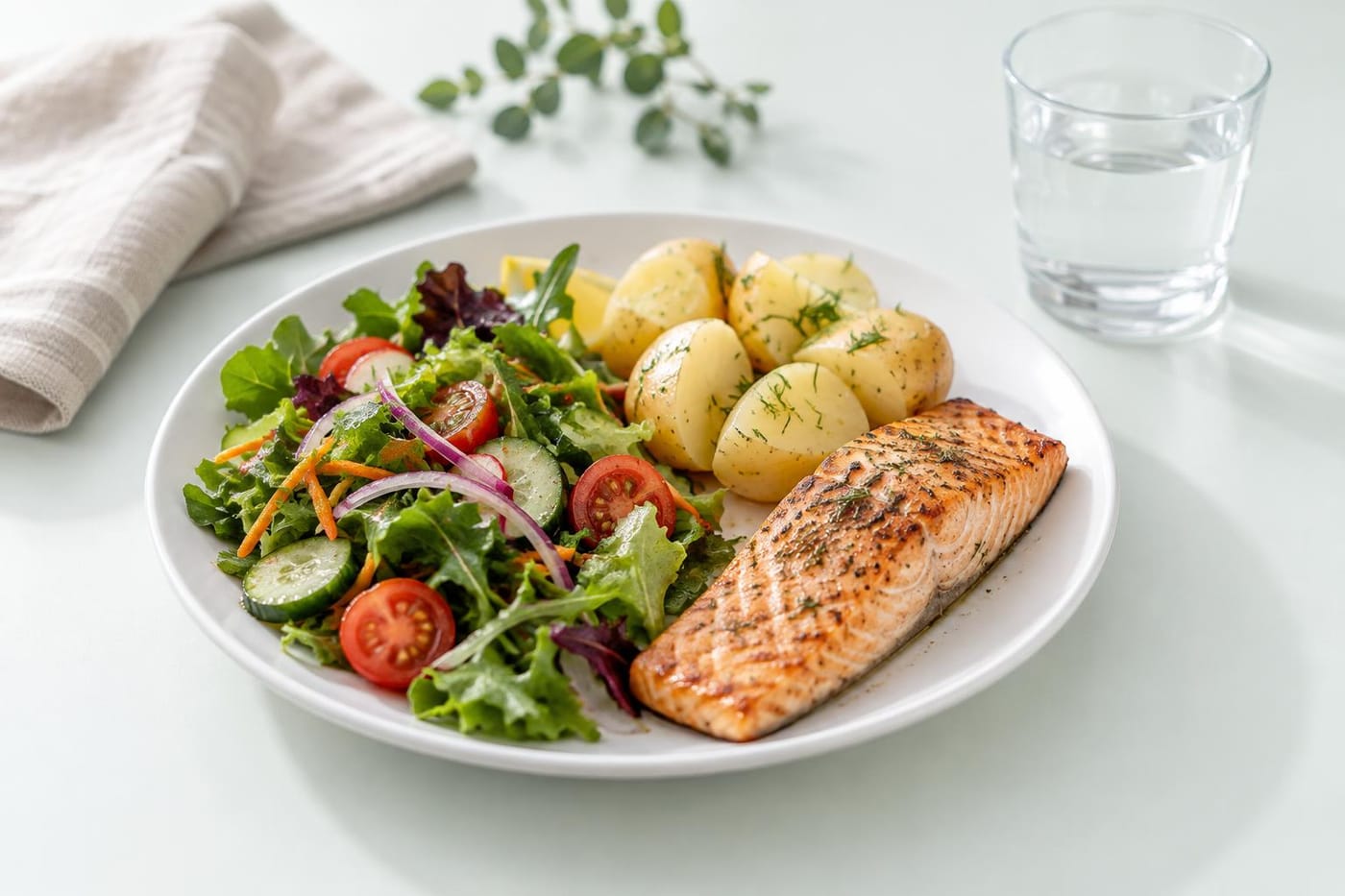
Balanced means this: half your plate is vegetables and fruit, a quarter is grains or potatoes, ideally whole grain, and a quarter is protein from legumes, dairy, fish, eggs or a little meat. Add plant oil and 1.5 liters of water. In numbers: 400 g of vegetables, 250 g of fruit, three servings of dairy, fish twice a week and no more than 300 to 600 g of meat per week. If you eat like this, your PRAL almost automatically lands between about −15 and +10 per day: vegetables, fruit and potatoes offset meat, cheese and bread. PRAL does not replace the rules, but it shows you whether the balance is right.
What “balanced” means
Balanced is not a diet. It is a distribution: every food group shows up, and none dominates. The German Nutrition Society (DGE) sums this up in ten rules and a food circle. The Harvard plate rule turns it into a picture you can apply to every meal.
The plate rule:
- Half the plate: vegetables, salad, fruit. The more colorful, the more different vitamins and phytochemicals you get. Potatoes don’t count here.
- One quarter: whole grains, potatoes, rice, pasta. Whole grains provide fiber, magnesium and B vitamins, and they keep you full longer.
- One quarter: protein. Legumes, nuts, fish, eggs, dairy, poultry; red meat rarely, sausage hardly ever.
- On the side: one to two tablespoons of plant oil (rapeseed, olive), water or unsweetened tea.
Amounts per day and per week
| Group | Amount | What that looks like in practice |
|---|---|---|
| Vegetables | at least 400 g per day | three handfuls: salad at lunch, a vegetable side at dinner, raw vegetables as a snack |
| Fruit | 250 g per day | two pieces, whole rather than as juice |
| Grains, potatoes | 4 to 6 servings per day | rolled oats in the morning, bread, potatoes or rice with one meal |
| Dairy | 3 servings per day | a glass of milk or a cup of yogurt, 30 g of cheese |
| Fish | 1 to 2 times per week | once of those as fatty ocean fish |
| Meat | no more than 300 to 600 g per week | two to three meals, sausage included |
| Legumes | several times per week | lentils, beans, chickpeas as a protein source |
| Nuts | 25 g per day | one handful |
| Oil | 2 tablespoons per day | rapeseed or olive oil, butter sparingly |
| Fluids | 1.5 liters per day | water, unsweetened tea; coffee counts |
| Sugar, salt | little | under 50 g of sugar, under 6 g of salt |
Where PRAL fits in
PRAL (potential renal acid load) measures whether a food leaves acid or base behind after digestion. Protein and phosphorus act as acids; potassium, magnesium and calcium act as bases. That leads to a simple observation: the two plate quarters for grains and protein are acid-forming, and the vegetable and fruit half is alkaline. A balanced meal that follows the plate rule therefore almost always has a PRAL close to zero.
The reverse is also true: a clearly positive daily value shows that the vegetable half is missing. Not because acid is dangerous, but because the plate is out of balance. That makes PRAL a measure of exactly what “balanced” means.
| Plate quarter | Example per serving | PRAL per serving |
|---|---|---|
| Vegetables (200 g) | Broccoli, carrot, zucchini, mixed | −7.5 |
| Fruit (150 g) | Apple | −2.9 |
| Grains (150 g cooked) | Wholemeal pasta | +6.2 |
| Potatoes (200 g) | Potatoes boiled in their skins | −13.1 |
| Protein (120 g) | Chicken breast | +12.3 |
| Protein (150 g cooked) | Lentils | +4.6 |
| Dairy (150 g) | Plain yogurt | +0.8 |
| Cheese (30 g) | Gouda | +5.3 |
| Oil (10 g) | Olive oil | 0.0 |
Two examples from this table:
- Chicken breast with pasta and a little salad (50 g): +12.3 +6.2 −2.2 = +16.3. Protein and grains, no vegetables. Not balanced, and acid-heavy by PRAL.
- Chicken breast with potatoes and vegetables (200 g): +12.3 −13.1 −7.5 = −8.3. The same protein serving, balanced by the plate rule, and alkaline by PRAL.
ℹ️ PRAL doesn't measure everything
Sugar, alcohol and fat have PRAL values around zero, and white flour is only slightly acid-forming. A day of white bread, soda and french fries looks unremarkable by PRAL, yet it is anything but balanced. PRAL shows the ratio of vegetables to protein and grains, not the quality of carbohydrates and fats. You need both to see the full picture.
A balanced day
- Breakfast: rolled oats (50 g) with yogurt, an apple and a handful of nuts. PRAL about +3.
- Lunch: lentil and vegetable curry with brown rice, salad with rapeseed oil. PRAL about −5.
- Afternoon: a banana, wholemeal bread with 30 g of cheese. PRAL about 0.
- Dinner: oven-baked salmon (120 g) with potatoes and broccoli. PRAL about −2.
- Drinks: 1.5 liters of water and tea, two cups of coffee. PRAL about −9.
All together, about −13: every group is represented, with two servings of dairy, fish, legumes, whole grains and more than 400 g of vegetables. The PRAL calculator lets you check your own days.
Common mistakes and easy fixes
- Vegetables only as garnish. Two lettuce leaves are not half a plate. Fix: put vegetables on your plate first, then the rest.
- Protein only from meat and cheese. Both are acid-forming and high in salt. Fix: replace two meat meals per week with legumes or fish.
- Fruit as juice. A glass of orange juice has the sugar of three oranges and no fiber. Fix: eat whole fruit, and drink juice as a spritzer.
- Forgetting whole grains. White flour provides energy and little else. Fix: switch bread, pasta and rice step by step, and have rolled oats in the morning.
- Forgetting to drink. Thirst is often mistaken for hunger. Fix: drink a glass of water before every meal.
Read more: What is an alkaline diet?, Alkaline diet: weekly meal plan, Potassium-rich foods, Alkaline food list of all foods.
Bottom line
Balanced means the plate rule, every day: half vegetables and fruit, a quarter whole grains or potatoes, a quarter protein, plus oil and water. If you stick to it, you meet the DGE rules and have a PRAL close to zero or slightly negative, without ever doing the math. PRAL is your check: if it stays above +10 for a long time, vegetables are missing. If it falls far below that, protein is usually missing.
Eat balanced, with one number as your check.
The app shows your daily PRAL. If it is close to zero, your ratio of vegetables to protein and grains is right.
Free for Android · iPhone coming soon