Alkaline Drinks: What Really Counts, From Water to Coffee
Basentracker Team
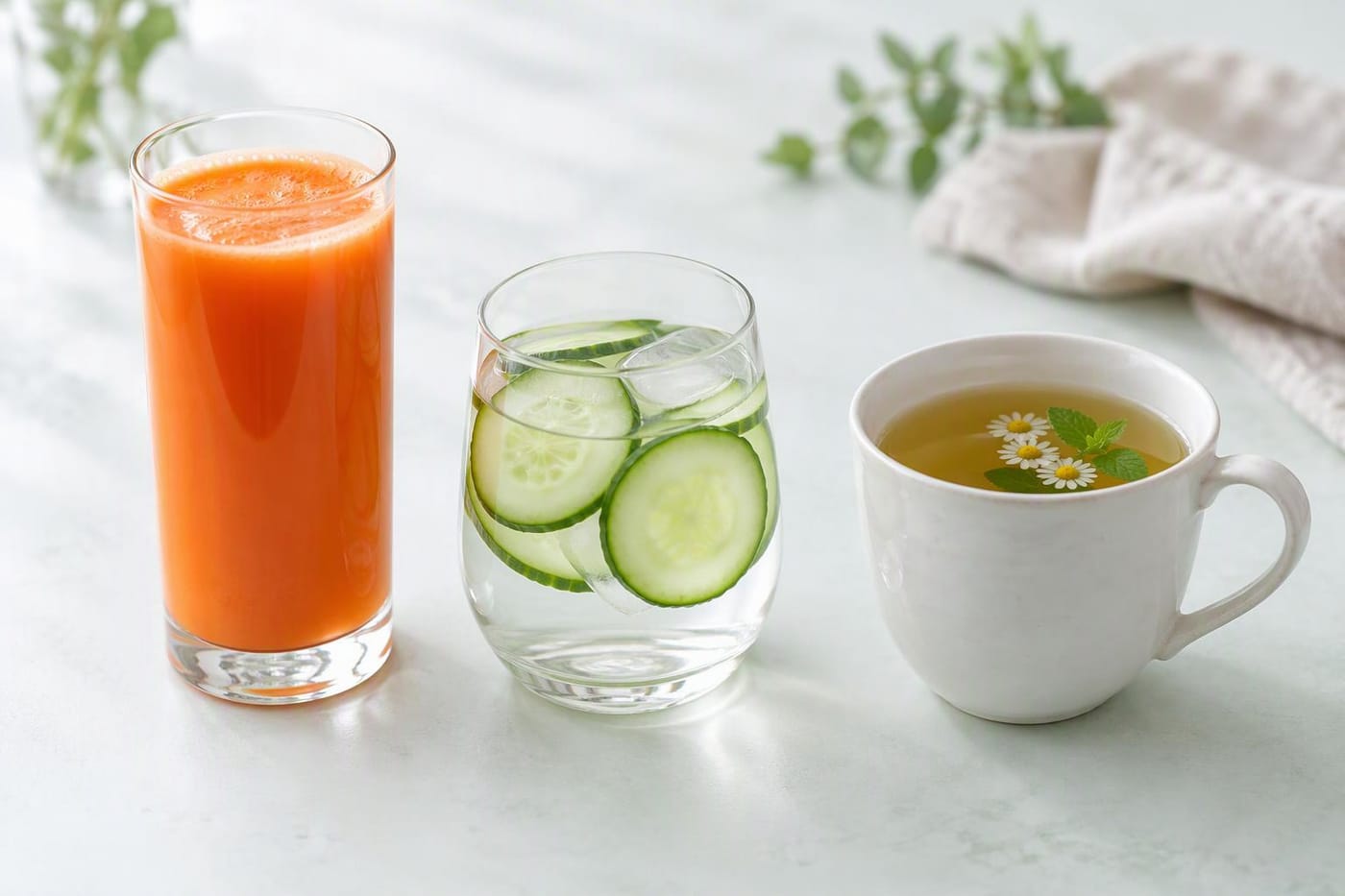
Almost all drinks are neutral to slightly alkaline. Vegetable and fruit juices are clearly in negative territory (carrot juice −3.8, orange juice −2.4 per 100 ml), coffee is slightly alkaline (−2.3), tea is practically neutral, milk is neutral, beer is neutral and wine is slightly alkaline. Acid-forming drinks practically don’t exist. Even cola, at +0.5, sits right at the boundary. But no drink “de-acidifies” you either: the effect per glass is small, and “alkaline water” with a high pH does nothing that a mineral water rich in bicarbonate doesn’t also do.
Why drinks barely move your balance
The PRAL comes from minerals and protein. Drinks are 85 to 100% water, so their values per 100 ml are small. Even the most alkaline juice gives you less per glass than a potato. Put the other way around: you don’t have to avoid any drink to eat an alkaline diet, and you can’t drink anything to offset an acid-heavy meal.
The exceptions with a real effect are vegetable juices (potassium) and mineral waters high in bicarbonate. More on that below.
All common drinks at a glance
Values per 100 ml from the Basentracker database, sorted from alkaline to acid-forming.
| Drink | PRAL per 100 ml | Per glass (200 ml) |
|---|---|---|
| Coconut water | −5.7 | −11.4 |
| Vegetable juice (mixed) | −4.4 | −8.7 |
| Pomegranate juice | −4.3 | −8.7 |
| Tomato juice | −4.3 | −8.6 |
| Carrot juice | −3.8 | −7.7 |
| Pineapple juice | −2.6 | −5.3 |
| Orange juice | −2.4 | −4.9 |
| Coffee, black | −2.3 | −4.6 |
| Lemon juice | −2.3 | −0.7 (30 ml) |
| Espresso | −1.9 | −0.6 (30 ml) |
| Apple juice | −1.8 | −3.6 |
| Soy drink, unsweetened | −1.6 | −3.2 |
| Red wine | −1.6 | −2.4 (150 ml) |
| Fruit spritzer | −1.3 | −2.7 |
| Almond milk, unsweetened | −1.3 | −2.6 |
| Oat drink, unsweetened | −1.2 | −2.3 |
| White wine | −1.0 | −1.6 (150 ml) |
| Beer | −0.4 | −2.1 (500 ml) |
| Alcohol-free beer | −0.4 | −2.1 (500 ml) |
| Black tea | −0.3 | −0.6 |
| Herbal tea | −0.3 | −0.6 |
| Latte macchiato | −0.3 | −0.5 |
| Cappuccino | −0.3 | −0.5 |
| Mineral water (average) | −0.2 | −0.5 |
| Green tea | −0.2 | −0.4 |
| Iced tea, sweetened | −0.2 | −0.3 |
| Tap water | −0.1 | −0.2 |
| Lemonade, clear | 0.0 | 0.0 |
| Milk, 3.5% | +0.1 | +0.3 |
| Cola | +0.5 | +1.0 |
| Condensed milk, sweetened | +0.9 | +0.2 (20 ml) |
| Sheep milk | +1.1 | +2.1 |
The most acid-forming everyday drink is cola at +0.5, right at the edge of slightly acid-forming. Milk is at +0.1 and neutral. The fear of “acid-forming drinks” is unfounded. What can make drinks unhealthy is sugar (cola, iced tea, lemonade, juices) and alcohol, and that has nothing to do with PRAL.
Coffee: the drink most often cut for the wrong reason
Coffee has a PRAL of −2.3 per 100 ml, espresso −1.9. Coffee beans bring potassium and magnesium and hardly any protein or phosphorus. Coffee’s reputation as an “acid former” comes from confusing it with stomach acid: roasting compounds and caffeine can irritate the stomach. That is a question of how well you tolerate coffee, not of your acid-base balance. Milk changes little, sugar changes nothing at all.
Two to three cups a day are a non-issue for your balance. People who cut back on coffee do it for sleep, blood pressure or their stomach. More on this: Is coffee acidic?
Alkaline water: what’s true and what’s marketing
This is worth a close look, because a lot of money is made with it.
What counts: dissolved minerals, above all bicarbonate (HCO₃⁻), plus calcium and magnesium. Mineral waters with more than 1,000 mg of bicarbonate per liter have a measurable alkaline effect. At −5 to −8 per liter, it’s on the scale of a serving of vegetables. You’ll find this on the label.
What doesn’t count: the pH of the water. “Alkaline water” with a pH of 8 to 9.5 from ionizers or bottles is neutralized right away in the stomach (pH 1 to 2). That pH never reaches your gut, let alone your blood. A water with a pH of 9 and few minerals does nothing. A water with a pH of 7 and 1,800 mg of bicarbonate does something.
Buying tip: Look for “bicarbonate” or “HCO₃” on the label. Over 1,000 mg/l is good, over 1,500 mg/l is very good. Magnesium over 50 mg/l is a bonus. These waters cost 20 to 60 cents per liter at the supermarket. Ionizers cost hundreds of euros for water that can’t do anything.
⚠️ Kidneys
If your kidney function is impaired, talk to your doctor about potassium- and mineral-rich waters and especially about vegetable juices. This restriction doesn’t apply to healthy people.
Juices: alkaline, but with sugar
Along with coconut water, fruit and vegetable juices are the most alkaline drinks, because the potassium from the fruit stays in the juice. A glass of carrot juice brings −7.7, a glass of orange juice −4.9. That is real and useful for your balance.
The catch with fruit juice: one glass contains the sugar of three to four pieces of fruit, without their fiber. The whole fruit is almost always the better choice. Vegetable juices (tomato, carrot, beet) barely have this problem. That makes them the only drink that really works as an “alkaline building block.” A spritzer made of one-third juice and two-thirds mineral water combines both.
Tea, plant-based drinks and alcohol in brief
Tea is neutral, no matter the type: herbal tea −0.3, green tea −0.2, black tea −0.3. “Alkaline tea” from the pharmacy is herbal tea with a different label.
Plant-based drinks are slightly alkaline (almond −1.3, oat −1.2, soy −1.6, rice −1.7). Cow’s milk is neutral (+0.1). For your balance, the choice is secondary. Buy unsweetened: sweetened versions have up to 7 g of sugar per 100 ml.
Beer and wine are neutral to slightly alkaline by PRAL (beer −0.4, red wine −1.6, white wine −1.0). The PRAL rates the mineral balance, not the alcohol. Alcohol strains your liver, your sleep and your mineral balance in other ways. Here, the acid-base balance is no argument either way. Why wine shows up green and vodka neutral: Alkaline doesn’t mean healthy.
Quick answers: Is water acidic?, Is tea acidic?, Is beer acidic?, Is wine acidic?, Is milk acidic?, Is oat milk acidic?, Is lemon water acidic?. What’s behind “alkaline water” and which mineral water really has an alkalizing effect: Alkaline water.
Frequently asked questions
What is the most alkaline drink? Coconut water (−5.7 per 100 ml), followed by vegetable juice (−4.4) and pomegranate and tomato juice (−4.3 each). Among everyday drinks without sugar: black coffee (−2.3), and, counted over the whole day, mineral water rich in bicarbonate.
Is cola acidic? Barely: +0.5 per 100 ml, right at the boundary of slightly acid-forming. The amount of phosphoric acid in cola is small. Cola is a poor choice for other reasons: 10 g of sugar per 100 ml.
Does lemon water in the morning help? A little: the juice of half a lemon brings about −0.7. An apple brings −2.9. Lemon water is a nice ritual, not a real lever.
How much should I drink? 1.5 to 2 liters, more in hot weather and when you exercise. For getting rid of acid, drinking enough matters more than what you drink. Your kidneys need water to excrete acid.
Count your drinks without overrating them.
Basentracker adds juices, coffee and milk to your daily balance, with the real values per glass. You see what counts and what doesn't.
Free for Android · iPhone coming soon
Bottom line
When it comes to drinks, there’s nothing to ban and little to gain. Vegetable juices and mineral-rich water help a little, coffee and tea do no harm, and milk is neutral. If you want to improve what you drink, cut back on sugar and alcohol, not acid.