Acidic Body Symptoms: What's Behind Them and What Helps
Basentracker Team
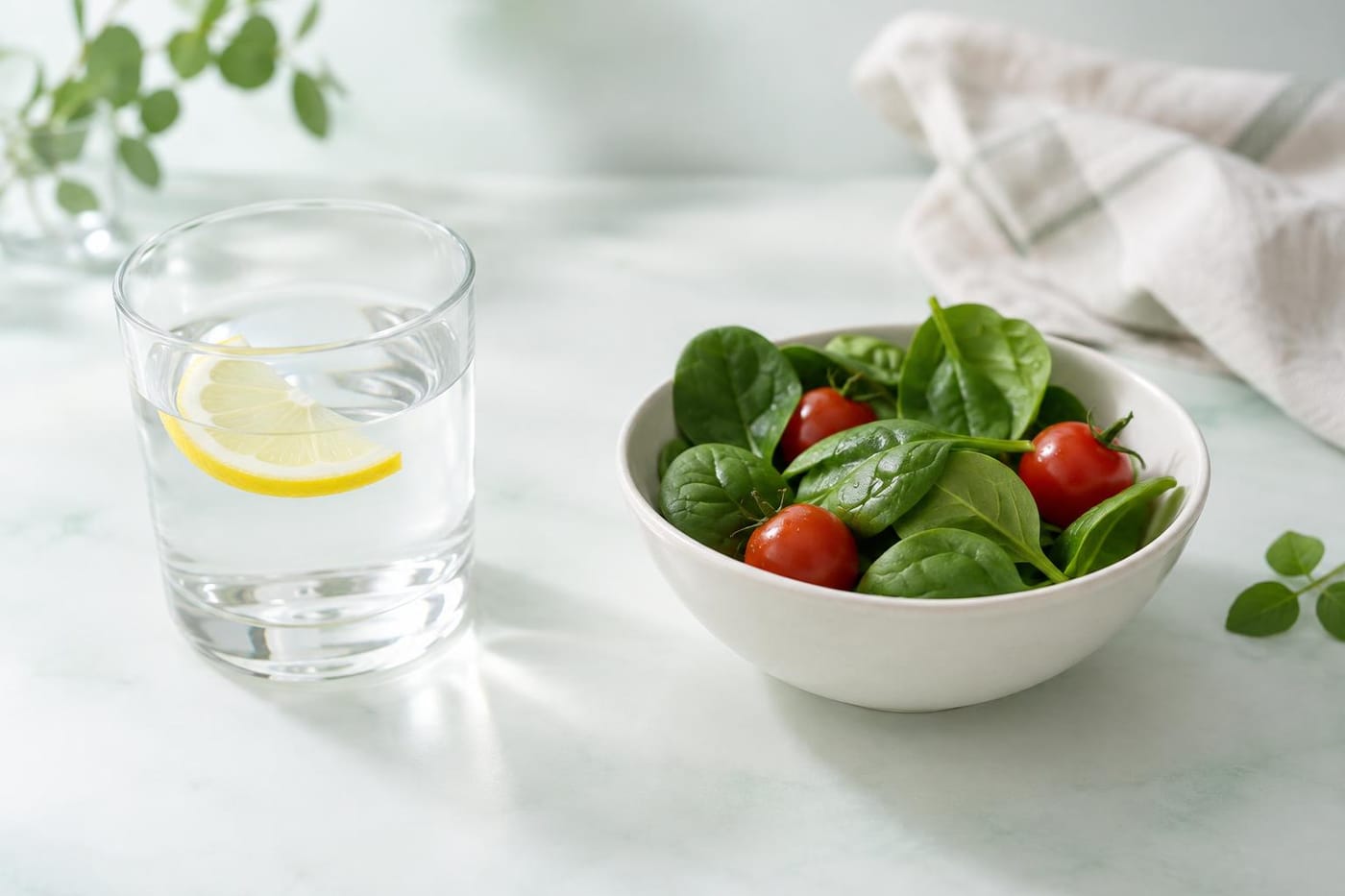
Truly acidic blood (acidosis) is a medical emergency and has nothing to do with diet. What wellness guides call “being too acidic” is a constantly high acid load from food, which the body buffers through the kidneys, lungs and bones. It does not make you sick in an acute sense, but it costs minerals and puts strain on the kidneys. Typical complaints such as fatigue, muscle tension or blemished skin usually have other causes. What measurably helps: more vegetables, fruit and potatoes, less cheese, meat and sausage. Alkaline powder is no substitute for that.
Two things called “too acidic” that have nothing to do with each other
The term is used for two completely different conditions, and mixing them up is the reason the topic attracts so much nonsense.
Medical acidosis. In healthy people, blood pH lies between 7.35 and 7.45. If it drops below that, doctors call it acidosis. This happens with uncontrolled diabetes, severe kidney failure, poisoning or respiratory arrest, never because of a cheese sandwich. The body regulates blood pH with three systems (buffers in the blood, exhaling CO₂, excretion through the kidneys) so tightly that diet cannot shift it. Someone with acidosis is in the intensive care unit.
Diet-related acid load. What your diet does change is the amount of acid your kidneys have to excrete every day. Protein and phosphorus from meat, cheese, eggs and grains leave behind sulfuric and phosphoric acid after they are metabolized. Potassium, magnesium and calcium from vegetables, fruit and potatoes leave behind bases. The difference is the acid load, and that is exactly what the PRAL measures. It can be detected in urine and has been well studied since the work of Remer and Manz in the 1990s.
ℹ️ What PRAL means
PRAL stands for potential renal acid load, the estimated acid load on the kidneys per 100 g of food. Negative means alkalizing, positive means acid-forming. All values on this page come from the Basentracker database.
What a high acid load has been shown to do
The research here is more sober than the self-help literature, but it is not empty. Three effects are well documented:
The kidneys work harder. In nephrology, a constantly high acid load is considered a risk factor for the progression of existing kidney weakness. People with reduced kidney function benefit measurably from a diet richer in bases, and this is part of the guidelines.
The body buffers with minerals. To neutralize the acid, the metabolism draws calcium and other bases from its stores, mainly from bone. Over the years, this can affect bone density. The effect is small and varies from person to person; it is one of many factors, not the decisive one.
Kidney stones become more likely. Acidic urine favors uric acid and calcium oxalate stones. If you are prone to them, your doctor is right to advise you to eat more vegetables and fruit and less animal protein.
What is not supported, on the other hand: that an acid-heavy diet causes cancer, that “toxins” or “slag” build up, that the body needs to be “de-acidified”, or that alkaline powder prevents disease. These claims come from marketing, not from studies.
The supposed symptoms, and what is usually behind them
Guides list dozens of symptoms for being too acidic: fatigue, headaches, muscle tension, blemished skin, hair loss, trouble concentrating, heartburn, joint pain. The problem: this list describes any adult with stress, too little sleep and an unbalanced diet. None of these symptoms is specific to a high acid load.
| Complaint | More common causes a doctor checks first |
|---|---|
| Fatigue | Lack of sleep, iron deficiency, thyroid, vitamin D, depression |
| Muscle tension | Lack of exercise, stress, magnesium deficiency, posture |
| Heartburn | Reflux, stomach acid (a local problem, not an acid-base problem) |
| Blemished skin | Hormones, sugar, dairy products, cosmetics |
| Joint pain | Osteoarthritis, gout (uric acid, where diet really does play a role), inflammation |
| Trouble concentrating | Sleep, fluids, blood sugar swings, screen time |
That does not mean diet doesn’t matter. If you live mostly on bread, cheese, cold cuts and ready meals, you are also eating too few vegetables, too little fiber, too little potassium and too much salt. These shortfalls make you tired and sluggish, and they go hand in hand with a high acid load. The acid load is a symptom of the poor diet, not its cause.
⚠️ When to see a doctor
Persistent fatigue, joint pain, a racing heart, shortness of breath or unintended weight loss should be checked by a doctor, not treated with alkaline powder. A blood test covering iron, vitamin D, thyroid and kidney values tells you more than any pH test strip.
Why pH test strips prove nothing
Urine pH strips from the pharmacy show how acidic your urine is at that moment. That varies between 5 and 8 over the course of the day, depending on your last meal, fluids and time of day. In the morning it is almost always acidic, because overnight the kidneys excrete the previous day’s acid, and that is their job. Acidic urine means your kidneys are working. It says nothing about blood pH and nothing about an “overly acidic body”.
Saliva pH is even less meaningful. It depends mostly on what you ate five minutes ago.
What really helps: lowering the acid load on your plate
The good news: you need neither powders nor a cleanse. The acid load of a meal depends on a few ingredients, and you can swap them. Here are two examples from the database, one typical and one reworked.
Typical bread supper
- Wholemeal bread · 100 g +2.6
- Gouda (young) · 60 g +10.5
- Salami · 30 g +4.3
- Butter · 10 g +0.1
The same supper, reworked
- Wholemeal bread · 100 g +2.6
- Avocado · 80 g −7.9
- Tomato · 100 g −4.2
- Cream cheese · 30 g +0.9
- Cucumber · 80 g −2.6
The difference is almost 30 points, and that is for a single meal. The levers, in order of impact:
- Cut cheese in half. Hard cheese comes in at +17 to +30 per 100 g, more than almost any meat. Use cheese as a seasoning rather than a topping.
- Potatoes instead of pasta or rice. Potatoes −6.5, pasta +5.8, rice +1.8 per 100 g. This one habit shifts every main meal by 12 to 25 points.
- Double your vegetable portion. Spinach −12.2, kale −11.7, broccoli −6.1, tomato −4.2. 200 g of vegetables offset 100 g of meat.
- Limit meat to 100 g per meal and to three or four meals a week. On the other days, use lentils (+3.1) or beans (−1.2) as your protein source.
- Fruit as a snack. Banana −6.4, apple −1.9, instead of a cereal bar (+3.0) or cheese cubes.
What you do not have to cut: coffee (−2.3 per 100 ml), sugar (neutral), milk (neutral), bread in normal amounts (+2.5 to +5 per 100 g). These foods often appear on “forbidden” lists, even though the data don’t support it.
Which foods are alkaline and which are acid-forming, for all 977 entries in the database: alkaline food list. Acidic or Alkaline? answers the most common individual questions, and with the PRAL calculator you can work out your own meal. How buffers, lungs and kidneys work together: Acid-base balance explained simply.
Alkaline powder, alkaline baths, alkaline tea: what the data say
Alkaline powders (citrates and carbonates of potassium, magnesium and calcium) really do lower the acid load. Chemically, they have to. Two caveats: First, you get the same minerals from 300 g of vegetables, along with fiber, vitamins and a feeling of fullness. Second, potassium in powder form is dangerous if your kidney function is reduced; if you have kidney problems, don’t take any of it without talking to your doctor. For healthy people who have no time to cook, powder is not harmful, but it is an expensive shortcut.
Alkaline baths change the pH of your skin, not of your body. The skin does not absorb bases in any relevant amount. A warm bath is relaxing, and that is the whole effect.
Alkaline tea is herbal tea with a different label. Herbal tea has a PRAL of −0.3 per 100 ml, no matter what the package says.
Frequently asked questions
Can I have my acid-base balance tested? Yes, at the doctor’s office, through a blood gas analysis (shows true acidosis) or by measuring acid excretion in 24-hour urine (shows the acid load of your diet). Both are done to answer specific medical questions, not as a routine checkup. Home test strips are a gimmick.
How quickly does a more alkaline diet work? Acid excretion in urine changes within a day. Whether you feel better depends on what was bothering you before. People who eat more vegetables and fewer processed foods often feel more alert after one to two weeks, for many reasons at once.
Does a purely alkaline diet make sense? No, and it isn’t necessary either. Your body needs protein from legumes, fish, eggs and dairy products, and protein is simply acid-forming. The goal is a daily balance around zero or slightly below, not the most negative number possible. As a rule of thumb: about two thirds of your plate alkaline, one third can be acid-forming.
Does this also apply to gout? With gout, uric acid plays the main role, and more alkaline urine helps excrete it. Here, changing your diet has a direct, proven benefit, although more through purines and alcohol than through PRAL. The recommendations overlap: less meat, organ meats and beer, more vegetables.
You don't have to do the math. The app shows you your daily balance.
Log what you eat and instantly see whether your day is in the minus or the plus. No bans, no test strips, just the number that counts.
Free for Android · iPhone coming soon
Bottom line: no need to panic, but eat more vegetables
Outside of intensive care medicine, “being too acidic” as a disease does not exist. A high acid load from food certainly does. It is measurable, and over the years it matters for your kidneys and bones. The solution is unspectacular: potatoes instead of pasta, twice as many vegetables, half as much cheese, fruit as a snack. If you do that, you need neither powders nor pH strips, and most “symptoms” disappear because your diet as a whole has improved.