Are Bananas Acidic or Alkaline?
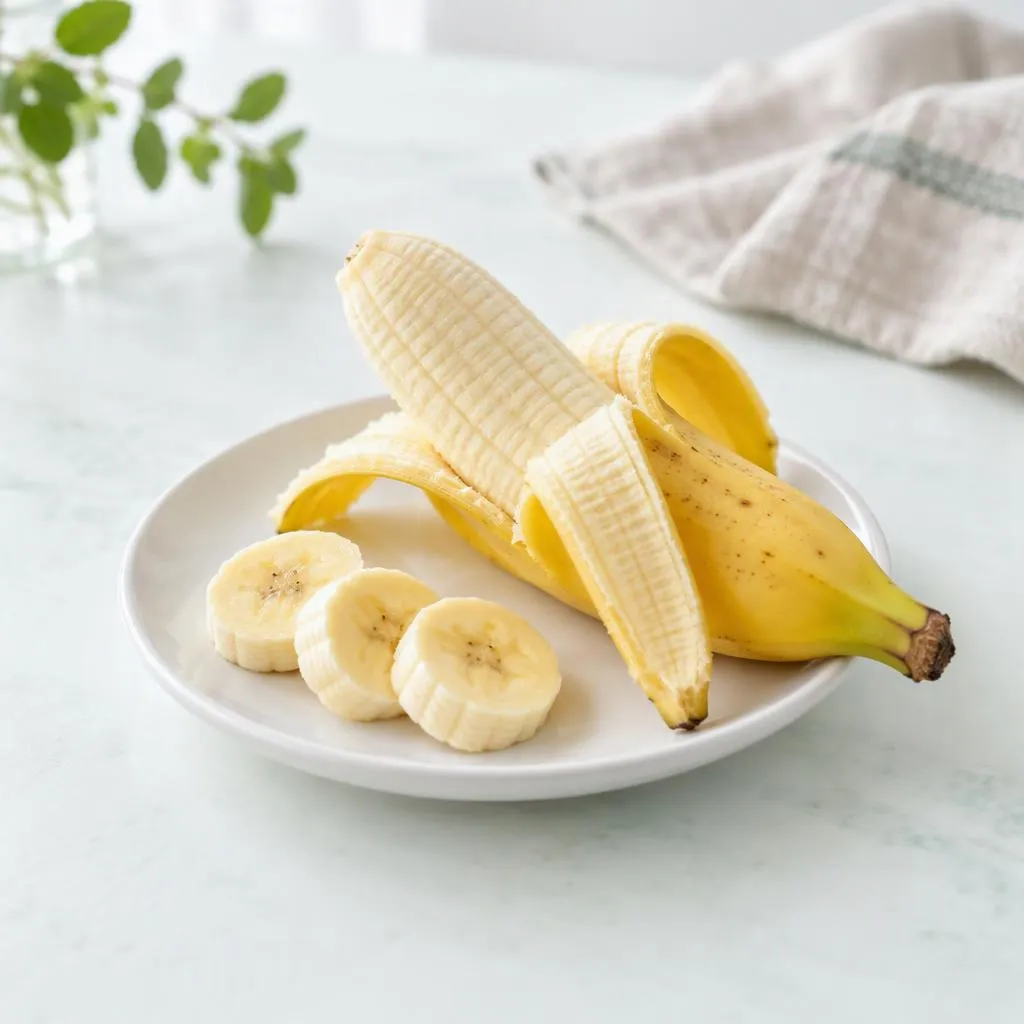
Alkaline, and strongly so: a ripe banana has a PRAL of −6.4 per 100 g. It is one of the most alkaline fruits you can buy at the supermarket.
Why bananas are alkaline
Bananas are the best-known source of potassium, and potassium is the main driver of a negative PRAL. A medium banana adds about −7.6 to your daily balance. That means a single piece of fruit can offset a breakfast egg or a serving of rolled oats.
Ripe bananas with brown spots are easier to digest and taste sweeter. Ripeness changes the PRAL very little. Dried as banana chips, the value goes to −10.2 per 100 g because the water is gone. The trade-off is that you also get added fat and sugar.
Acidic or alkaline: PRAL, not pH
The PRAL (potential renal acid load) estimates what a food leaves behind after digestion. It is not the pH of the food itself: a lemon tastes sour, yet its PRAL is −4.0. If you are asking whether bananas are acidic because of heartburn or reflux, that is a question of pH and your stomach, which the PRAL does not measure; talk to your doctor about it.
Bananas in different forms: raw, cooked, processed
How the PRAL changes with state and product. All values per 100 g or 100 ml.
| Food | PRAL |
|---|---|
| Banana (ripe) | −6.4 |
| Banana chips (dried) | −10.2 |
Goes well with
Frequently Asked Questions
Are bananas acidic or alkaline?
Alkaline, clearly. At −6.4 per 100 g, bananas rank in the top third of all fruits.
Are green bananas alkaline too?
Yes, their potassium content is similar. Green bananas contain more resistant starch and are harder to digest, but their PRAL stays negative.
Bananas and everything else on your plate: calculated automatically.
Basentracker adds up the PRAL of every meal and shows whether your day is in the alkaline range. Over 950 foods, photo scan, recipes, free.
Free for Android · iPhone coming soon
More fruit compared
All fruit with their PRAL: Fruit table. Back to the overview Acidic or Alkaline?, or put together a meal in the PRAL calculator.
Source: Basentracker food database (PRAL according to Remer & Manz, calculated from protein, phosphorus, potassium, magnesium and calcium per 100 g). This information does not replace medical advice.