Are Almonds Acidic or Alkaline?
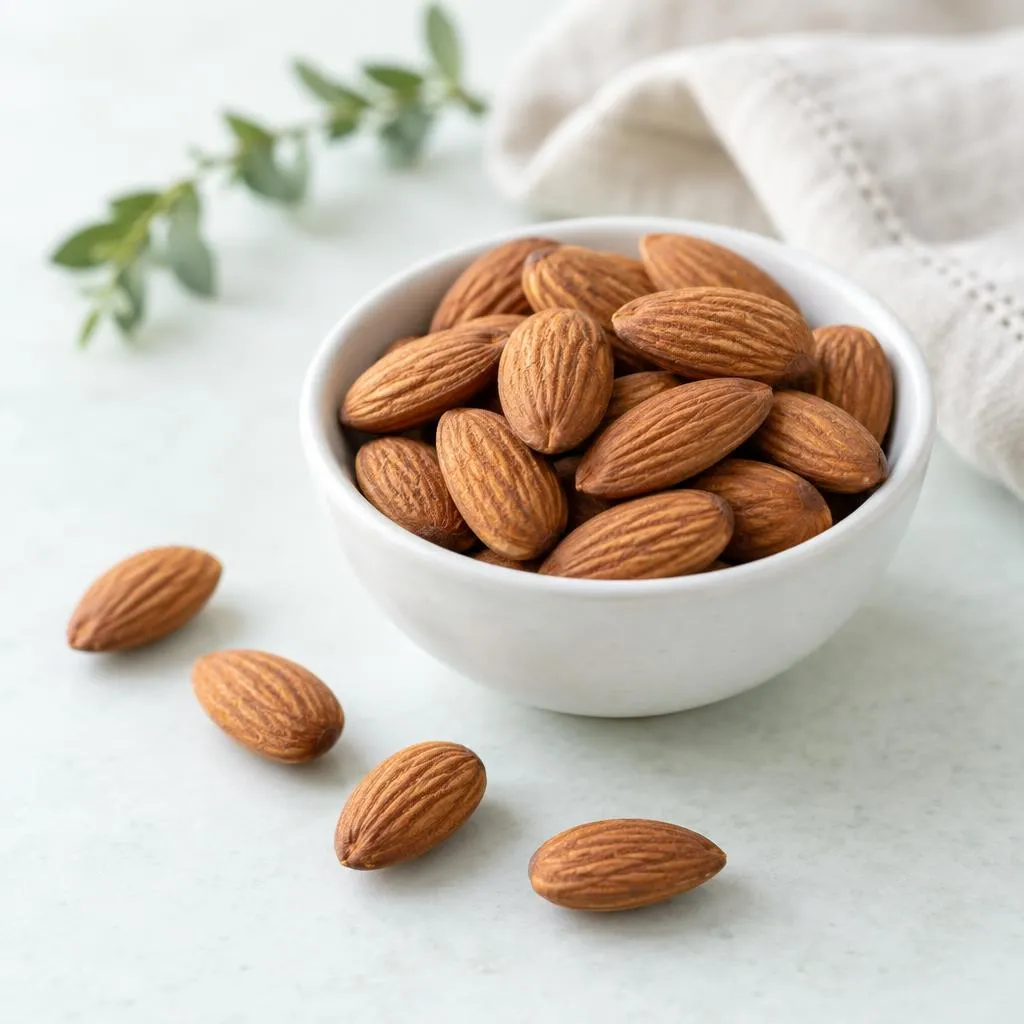
Acid-forming. With a PRAL of +10.5 per 100 g, almonds are clearly acid-forming, more so than any other common nut, while almond milk is mildly alkaline at −1.3.
Why almonds are acid-forming
Many alkaline diet guides list almonds as alkaline. The mineral data say otherwise: their high protein and phosphorus content clearly outweighs their magnesium and potassium. At +10.5, almonds rank even above walnuts (+5.6) and cashews (+7.1).
A 30 g handful comes to +3.1, about the same as a serving of rolled oats, and is easy to balance out with fruit. Almond butter comes in at +3.7. Almond milk turns mildly alkaline (−1.3) because protein and phosphorus stay behind when it is filtered. As a snack, in muesli or as almond butter, almonds are a very good choice. Just don't count on them as a "source of alkalinity."
Acidic or alkaline: PRAL, not pH
The PRAL (potential renal acid load) estimates what a food leaves behind after digestion. It is not the pH of the food itself: a lemon tastes sour, yet its PRAL is −4.0. If you are asking whether almonds are acidic because of heartburn or reflux, that is a question of pH and your stomach, which the PRAL does not measure; talk to your doctor about it.
Almonds in different forms: raw, cooked, processed
How the PRAL changes with state and product. All values per 100 g or 100 ml.
| Food | PRAL |
|---|---|
| Almonds (raw) | +10.5 |
| Almond butter (prepared) | +3.7 |
| Almond milk (unsweetened) (raw) | −1.3 |
| Hazelnuts (raw) | −3.2 |
Alkaline foods that balance it
Frequently Asked Questions
Are almonds acidic or alkaline?
Acid-forming (+10.5 per 100 g), clearly more than walnuts (+5.6) or cashews (+7.1). In handful-sized amounts, though, their contribution stays modest.
Are blanched (skinless) almonds any different?
Hardly. The skin contains fiber and polyphenols but few minerals. The PRAL stays at roughly the +10.5 of whole almonds.
Almonds and everything else on your plate: calculated automatically.
Basentracker adds up the PRAL of every meal and shows whether your day is in the alkaline range. Over 950 foods, photo scan, recipes, free.
Free for Android · iPhone coming soon
More nuts & seeds compared
All nuts & seeds with their PRAL: Nuts & Seeds table. Back to the overview Acidic or Alkaline?, or put together a meal in the PRAL calculator.
Source: Basentracker food database (PRAL according to Remer & Manz, calculated from protein, phosphorus, potassium, magnesium and calcium per 100 g). This information does not replace medical advice.